Claude for Small Business Brings AI Automation to Main Street
While enterprise AI adoption dominates headlines, the real transformation is happening in businesses you might walk past on your morning commute. Anthropic just launched Claude for Small Business, a package of 15 workflows and integrations designed specifically for the 36 million small businesses that form the backbone of the American economy. This represents a fundamental shift in how AI companies are thinking about their market.
The timing is strategic. Small businesses account for 44% of U.S. GDP and employ nearly half the private workforce, yet their AI adoption has consistently lagged behind larger enterprises. According to recent industry data, SMB adoption jumped from 22% in 2024 to 38% in 2026, nearly doubling in two years. Anthropic is positioning itself to capture this accelerating wave.
What Claude for Small Business Actually Delivers
| Aspect | Details |
|---|---|
| What it is | 15 pre-built AI workflows plus 15 reusable skills through Claude Cowork |
| Key integrations | QuickBooks, PayPal, HubSpot, Canva, Docusign, Google Workspace, Microsoft 365, Slack, Square, Stripe |
| Target users | Small business owners, solopreneurs, local shops |
| Cost | No extra charge beyond existing Claude subscription |
| Availability | Available now at claude.com/solutions/small-business |
The product ships with workflows covering six core business functions: finance, operations, sales, marketing, HR, and customer service. These address the tasks that small business owners identified as their biggest time drains during Anthropic’s research phase.
How the Workflows Actually Function
Claude for Small Business operates through Claude Cowork, Anthropic’s agent platform. Users toggle on integrations, link their existing business tools, select a workflow, and Claude generates an actionable plan for approval before executing anything.
The key distinction here is that nothing happens without explicit user approval. This matters for building trust in AI systems where the stakes involve real money and real business operations.
Specific capabilities include:
- Payroll planning that matches QuickBooks cash balances with PayPal payments, builds 30-day forecasts, and flags overdue items
- Month-end closing with automated reconciliation and reporting
- Campaign management that analyzes HubSpot data, identifies sales lulls, and creates promotional materials in Canva
- Invoice chasing with margin analysis
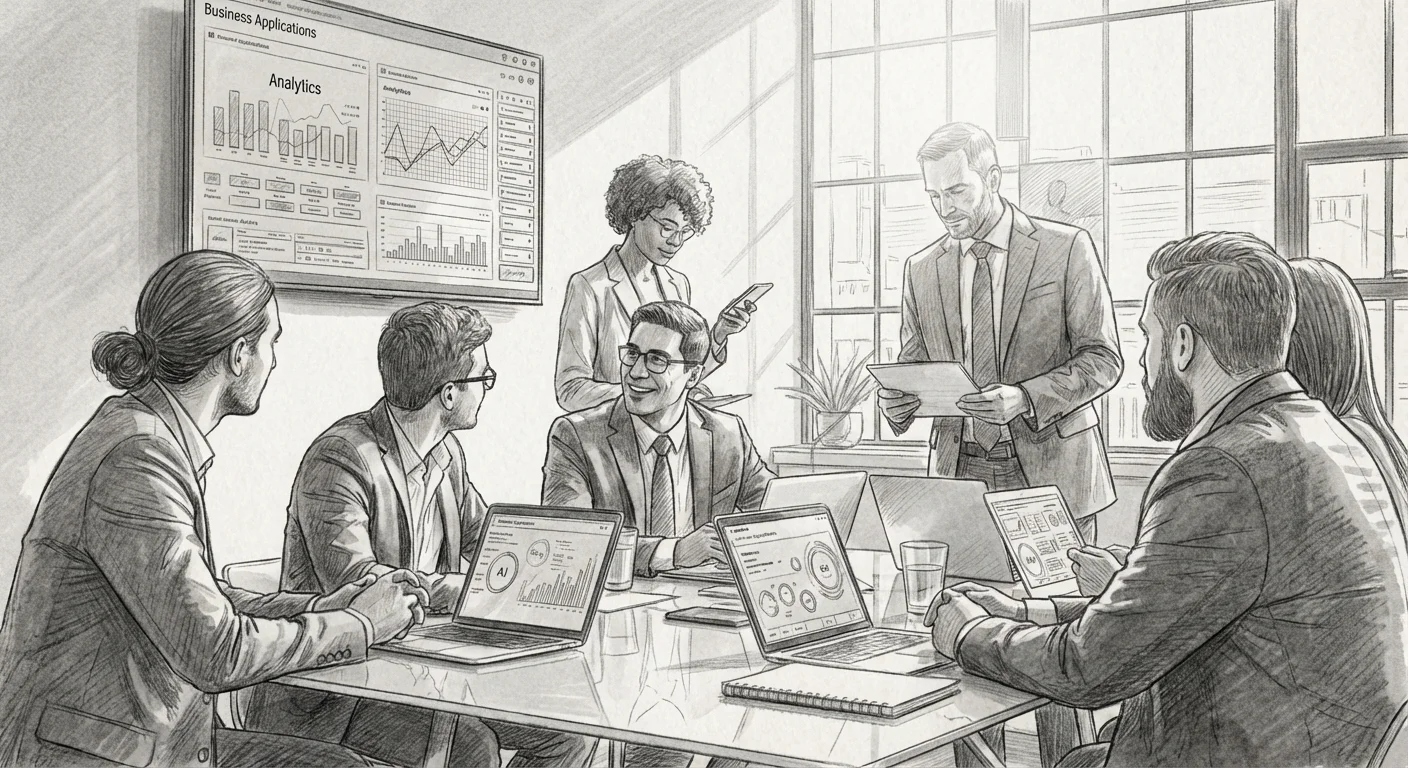
- Business performance dashboards pulling cash position, sales trends, and pipeline activity onto a single view
The workflows connect these tools so Claude can pull context across your entire business stack. This represents a fundamentally different approach than point solutions that only work within a single application.
The Strategic Implications for AI Engineers
From an engineering perspective, this launch signals several important industry shifts worth understanding. Anthropic is not building another SaaS tool. They are positioning Claude as an orchestration layer that sits above existing software and coordinates actions across platforms.
This architecture pattern, where AI acts as the glue between disparate systems, is becoming increasingly common in agentic AI implementations. Understanding how to build similar integration patterns is a valuable skill as more enterprises adopt this approach.
Wall Street has noticed. Software stocks including Salesforce, ServiceNow, Intuit, and Docusign have declined as investors worry that AI platforms will supplant existing vendors. Whether that concern is justified remains unclear, but the market clearly sees AI orchestration as a threat to traditional SaaS business models.
The SMB AI Adoption Curve
The statistics paint a compelling picture of where small business AI is heading:
- 82% of small business employers have invested in AI tools according to SBE Council
- 58% of small businesses now use generative AI, up from 40% in 2024
- 91% of SMBs using AI report revenue boosts according to Salesforce research
- 83% of growing SMBs have adopted AI versus 55% of declining businesses
- Average small business uses a median of five AI tools combining assistants, marketing platforms, and automation
The correlation between AI adoption and business growth is becoming impossible to ignore. Businesses that implement AI effectively are outperforming those that do not. This creates urgency for understanding practical AI implementation beyond theoretical knowledge.
What This Means for Builders
If you are building AI solutions for business users, Claude for Small Business offers a case study in several important design decisions:
Pre-built workflows over blank canvases. Rather than giving users an empty prompt box and expecting them to figure it out, Anthropic packaged specific use cases that address documented pain points. This dramatically lowers the barrier to adoption.
Integration-first architecture. The value comes from connecting existing tools, not replacing them. This is strategically smart because it reduces switching costs and positions Claude as additive rather than disruptive to existing workflows.
Human-in-the-loop by default. Every action requires user approval before execution. This builds trust while also covering Anthropic legally if something goes wrong with a financial transaction.
Free training and enablement. Anthropic is launching a tour starting May 14 with free half-day workshops in 10 cities. They understand that the product alone is insufficient. Users need education on how to actually use AI effectively.
Warning: Integration Does Not Equal Intelligence
The convenience of connecting Claude to your business tools creates real risks worth acknowledging. When AI can access your financial data, customer information, and business operations simultaneously, the attack surface expands considerably.
Anthropic states that existing permissions within connected tools carry over. Employees who cannot access certain data in QuickBooks today will not access it through Claude either. The company also claims no training on customer data by default for Team and Enterprise plans.
These are good starting points, but small business owners should still approach integration cautiously. Start with lower-stakes workflows before enabling anything involving financial transactions or sensitive customer data.
The Bigger Picture
Anthropic reported their 2026 revenue run rate climbed above $30 billion, up from $9 billion last year. The company is preparing for a potential IPO later this year and clearly sees enterprise and SMB markets as critical growth vectors.
For AI engineers, this launch reinforces that understanding business value creation matters as much as technical implementation skills. The winning AI products are not the most technically sophisticated. They are the ones that solve real problems for specific users in ways those users can actually adopt.
Claude for Small Business is less about the AI capabilities, which are the same Claude models available elsewhere, and more about packaging, integration, and go-to-market strategy. That should inform how engineers think about their own AI projects.
Recommended Reading
- Agentic AI: A Practical Guide for AI Engineers
- AI Agent Development Practical Guide for Engineers
- Why Most AI Projects Fail
- AI Agent Workflows for Knowledge Management
Sources
- Introducing Claude for Small Business - Anthropic Official Announcement
If you are building AI systems for business users or want to understand how production AI implementations actually work, join the AI Engineering community where members work through 25+ hours of exclusive AI courses, get weekly live coaching, and build toward $200K+ AI engineering careers.
Inside the community, you will find practical implementation guidance that goes beyond what any vendor documentation provides.