Developer vs Engineer in the AI Era
There is still a real difference between a developer and an engineer, and the AI era is making that gap wider every day. A developer writes code. An engineer understands end-to-end systems. That distinction used to be subtle. Now, as AI tools can generate hundreds of lines of code in minutes, it has become the single most important factor in who gets hired, who gets promoted, and who gets replaced. If you are mapping out your AI engineering career path, understanding this distinction is where you need to start.
Why Code Generation Changed Everything
AI tools have made the act of writing code dramatically cheaper. Anyone can prompt an AI to scaffold an application, generate API endpoints, or wire up a database. The raw output of code is no longer the scarce resource it used to be.
This is actually great news if you think about it correctly. But it completely changes what companies value in the people they hire.
When code was expensive to write, companies hired people who could write it fast. Now that AI handles the writing, companies need people who can think about what should be written, catch mistakes in what was generated, and take responsibility for systems that run in production.
Developers could be replaced by better tools. If your entire value comes from translating requirements into code, that is exactly what AI tools are getting good at.
Engineers cannot be replaced because engineers are the ones who decide what to build, not just how to build it. They catch when the AI suggestion would break something downstream. They debug production issues at 2 a.m. without copy pasting error messages into a chatbot and hoping for the right answer.
What Engineers Do That AI Cannot
The engineer’s value sits at a layer that AI tools do not touch. Here is what that looks like in practice.
Architectural decision-making. Engineers weigh trade-offs between different approaches. They consider scale, maintainability, cost, and reliability. They make judgment calls that require understanding the full context of a business problem, not just the immediate technical requirement.
Failure analysis and debugging. When something breaks in production, engineers reason about the system as a whole. They understand how components interact, where bottlenecks form, and what cascading effects a failure might cause. This requires the kind of mental model that only comes from deep understanding.
Quality judgment on AI output. Senior engineers can review AI-generated code because they know what good code looks like. They can spot when an AI tool picked a deprecated library, made an inefficient design choice, or introduced a subtle bug that would only surface under load. This is the skill that makes AI tools actually useful rather than dangerous.
Responsibility and trust. Companies need people they can hand a critical project to and trust that the right decisions will get made. That requires someone who understands why things work, not just someone who can make things that appear to work.
The Career Implication
This distinction should shape how you invest your learning time. If you are spending all your energy learning how to prompt AI tools better while skipping fundamentals, you are optimizing for the developer path. That path is getting shorter every year as tools improve.
The engineer path requires understanding how systems actually work. Networking, databases, APIs, deployment infrastructure, security. These are not glamorous topics, but they are the foundation that lets you direct AI tools effectively instead of being at their mercy.
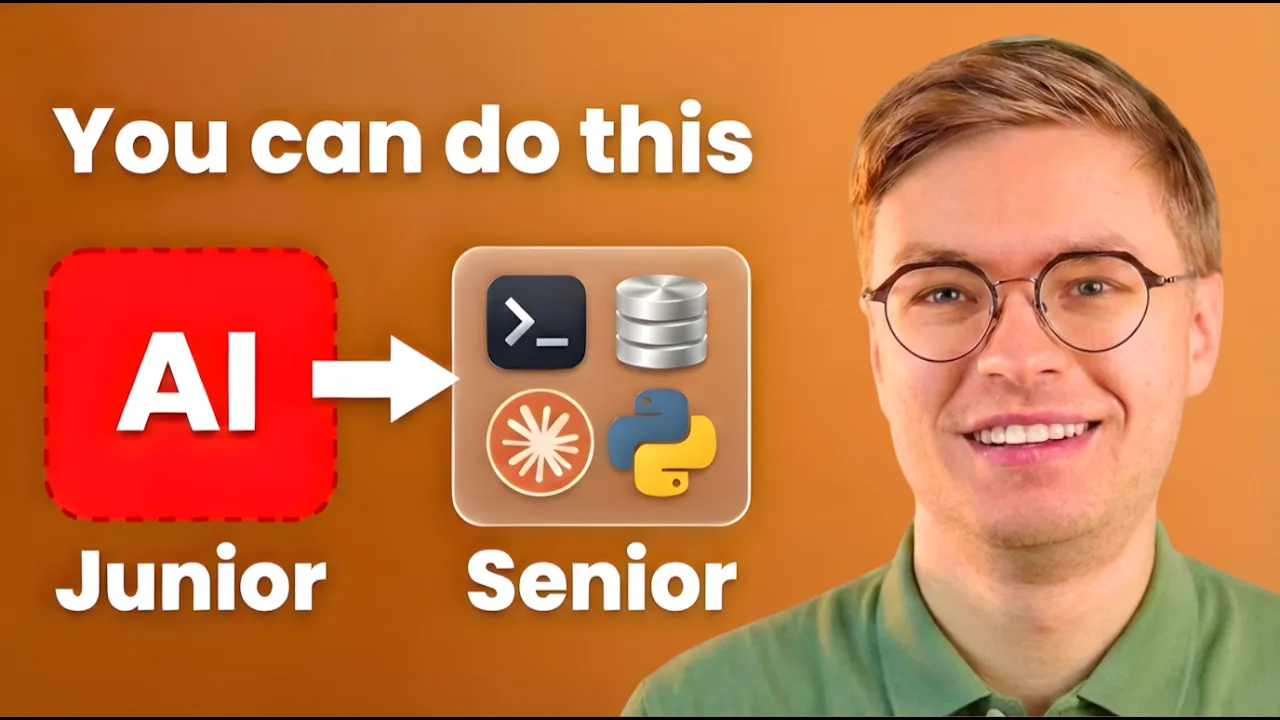
I went from junior to senior by focusing on exactly this. Not by writing more code faster, but by understanding the systems behind the code. That understanding is what lets me use AI tools productively today while still being able to catch their mistakes and make the right architectural calls. You can see how that career progression works in this guide on building an engineering career without a PhD.
The Good News for Juniors
If you are a junior right now, this is actually encouraging. The path forward is not to out-code AI. That is a losing game. The path forward is to become the person who knows when AI is wrong. To build the judgment, the system-level thinking, and the production experience that makes you irreplaceable.
Every industry still needs well-maintained software. Healthcare, finance, logistics, energy. They all need people who can think, not just prompt. And as AI makes code itself cheaper, the people who understand systems become more valuable, not less.
The engineers thriving right now are the ones who learned fundamentals first and then added AI on top. That is the career development strategy that actually works.
Move From Developer to Engineer
To hear the full breakdown of how this plays out in hiring and career growth, watch the full video on YouTube. I share real examples from interviews I have conducted and explain exactly what separates candidates who get hired from those who do not. And if you want to level up alongside other engineers who are building real systems, join the AI Engineering community where we share practical resources and support each other’s growth.