GPT-Rosalind Signals the Age of Domain Specific AI Models
While everyone rushes to build yet another chatbot wrapper, OpenAI just revealed where the real value lies: domain expertise combined with AI implementation. GPT-Rosalind, OpenAI’s first life sciences model, represents more than another benchmark achievement. It signals a fundamental shift toward specialized AI that creates career opportunities most engineers are completely missing.
Through implementing AI systems at scale, I’ve observed this pattern repeatedly. The engineers who combine deep domain knowledge with practical AI skills command the highest salaries and face the least competition. GPT-Rosalind makes this trajectory explicit.
What GPT-Rosalind Actually Delivers
GPT-Rosalind is a frontier reasoning model built specifically for biology, drug discovery, and translational medicine. Named after Rosalind Franklin, the scientist whose work contributed to understanding DNA structure, this model performs strongly across biochemistry, genomics, and protein engineering tasks.
| Aspect | Key Point |
|---|---|
| What it is | Domain-specific LLM for life sciences research |
| Key benefit | Connects to 50+ scientific tools and databases in workflows |
| Best for | Evidence synthesis, hypothesis generation, experimental planning |
| Limitation | U.S. enterprise only, gated through trusted access program |
The benchmarks tell a compelling story. On BixBench, which measures real-world bioinformatics tasks, GPT-Rosalind achieved a 0.751 pass rate, the highest among available models. On LABBench2, it outperformed GPT-5.4 on six of eleven tasks, with the most significant gains in CloningQA for designing molecular cloning protocols.
In a collaboration with Dyno Therapeutics, the model’s top 10 suggestions in an RNA sequence prediction task ranked above the 95th percentile of human experts. This suggests that on narrow scientific challenges, AI can match or exceed specialist performance.
Why Restricted Access Matters for AI Engineers
Here’s what most coverage misses: GPT-Rosalind is not available to general developers. Access requires qualification through a trusted access program. Launch partners include Amgen, Moderna, the Allen Institute, and Thermo Fisher Scientific.
This restriction reveals something important about where AI value is heading. OpenAI built safety measures including high-precision flagging for potentially dangerous biological research. The model is designed to support evidence synthesis and hypothesis generation, not replace expert judgment.
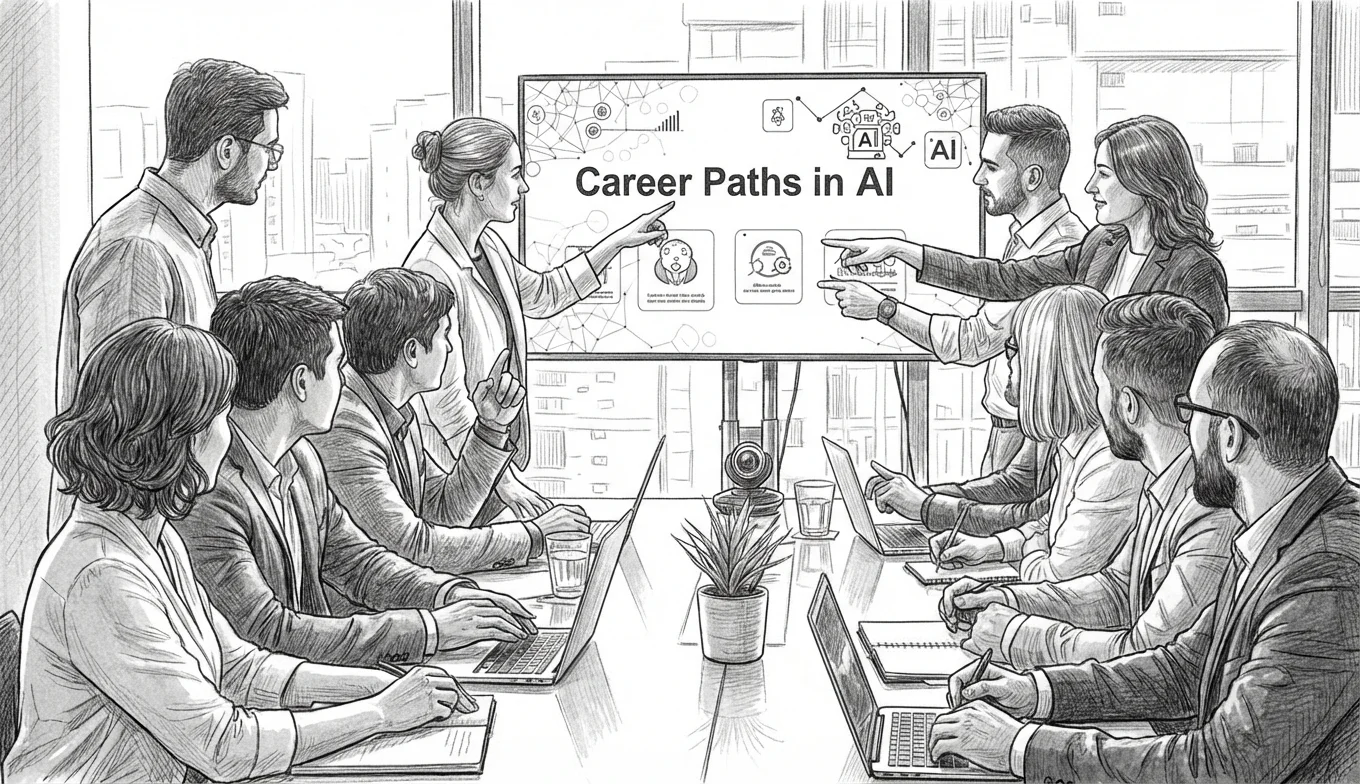
For AI engineers, this creates a clear signal. Companies integrating domain-specific AI models need engineers who understand both the technology and the domain constraints. The skills that create lasting career value now include navigating complex access requirements and regulatory environments.
The Competitive Landscape Intensifies
GPT-Rosalind positions OpenAI directly against Google DeepMind, whose AlphaFold model won a Nobel Prize in Chemistry for solving protein structure prediction. But these tools serve different purposes.
AlphaFold focuses on the specific problem of predicting 3D protein structure from amino acid sequences. GPT-Rosalind functions as an orchestration and reasoning layer. It can take AlphaFold’s structural outputs and integrate them with genomic data, literature, and experimental planning. They’re complementary rather than competing.
DeepMind’s lead remains substantial. Isomorphic Labs, Alphabet’s drug discovery subsidiary, has signed partnerships with Eli Lilly and Novartis totaling nearly $3 billion for AI-driven drug development. OpenAI is entering a market with established players and proven economics.
Career Implications for AI Engineers
The life sciences AI market is expanding rapidly, and the talent gap is significant. AI specialist positions in healthcare are projected to grow 35% faster than average through 2032. Clinical AI engineers with deep expertise command salaries exceeding $180,000.
This creates specific opportunities for engineers willing to specialize:
Integration engineering becomes critical as organizations connect models like GPT-Rosalind to existing research workflows, databases, and computational pipelines. The Life Sciences research plugin for Codex connects to over 50 scientific tools, requiring engineers who can build and maintain these integrations.
Regulatory compliance adds complexity that generalist engineers often lack. Working with HIPAA, FDA guidelines, and biosecurity protocols requires domain-specific knowledge that commands premium rates.
Domain translation emerges as a valuable skill. Engineers who can bridge conversations between research scientists and AI systems help organizations actually deploy these tools in production environments.
If you’re considering how to position your career for maximum impact, life sciences AI represents an underexplored path with substantial demand.
What This Means for General AI Engineering
The GPT-Rosalind release reinforces a pattern I’ve discussed before: the era of one-model-fits-all is ending. Organizations increasingly want AI that understands their specific domain, regulations, and workflows.
This has practical implications for building an AI engineering portfolio. Projects demonstrating domain expertise alongside AI implementation skills stand out. A RAG system for legal documents, a medical records analysis tool, or a financial compliance assistant showcases valuable specialization.
The engineers who thrive will combine core technical skills with deep knowledge of specific industries. Healthcare, legal, financial services, and scientific research each offer distinct opportunities where domain-specific AI creates measurable business value.
The Transparent Reality
OpenAI deserves credit for transparent limitations. GPT-Rosalind is designed to synthesize evidence, generate hypotheses, and support analysis. It does not replace expert judgment or real-world validation. The model is tuned to be more skeptical, reducing hallucinations and overconfidence in scientific contexts.
Independent evaluations and reproducible benchmarks will determine whether this becomes a reliable research assistant or remains a proprietary decision-support tool with limited community impact. Early access restrictions reduce immediate transparency, but also prevent misuse in sensitive biological research.
Warning: While domain-specific models create career opportunities, they also raise biosecurity concerns. Over 100 scientists have called for tighter controls on biological data used to train AI, citing pathogen design risks. Engineers working in this space must understand both the technical and ethical dimensions.
Recommended Reading
- 7 Future Jobs in AI and How to Prepare
- Durable Skills for AI Engineers
- 7 Key Drivers Behind AI Engineer Job Growth
Sources
- Introducing GPT-Rosalind for Life Sciences Research - OpenAI Official Announcement
The release of GPT-Rosalind marks a clear inflection point. Domain-specific AI models will increasingly require engineers who understand both the technology and the industries they serve.
If you want to build the skills that position you for these high-value opportunities, join the AI Engineering community where members follow 25+ hours of exclusive AI courses, get weekly live coaching, and work toward six-figure AI careers. Inside the community, you’ll find guidance on specializing effectively and building a portfolio that demonstrates domain expertise.