LLMOps Skills for AI Engineers
LLMOps is quickly becoming one of the most valuable specializations in AI engineering. As large language models move from demos into production systems, someone needs to handle prompt versioning, RAG pipeline management, vector database operations, and model monitoring at scale. That someone is the LLMOps engineer, and the skills required represent a new branch of MLOps that did not exist three years ago.
This is not a rebrand of an old role. It is a genuine expansion driven by the fact that LLM based systems have fundamentally different operational requirements than traditional ML models. And the demand is real. LangChain, one of the primary LLM orchestration frameworks, has over 90 million monthly downloads. When you need to run these frameworks reliably in production, the complexity is significant and growing.
What Makes LLMOps Different from Traditional MLOps
Traditional MLOps focuses on model training pipelines, feature stores, and model serving infrastructure. LLMOps shares the operational mindset but applies it to a different set of challenges.
Prompt versioning and management. In traditional ML, you version your models and training data. In LLMOps, you also need to version your prompts. A single word change in a system prompt can dramatically alter model behavior across thousands of user interactions. Managing prompt versions, testing changes systematically, and rolling back when something breaks requires the same rigor that DevOps engineers apply to application deployments.
RAG pipeline operations. Retrieval augmented generation systems combine document processing, embedding generation, vector storage, retrieval logic, and language model inference into a single pipeline. Each component can fail independently, and the interactions between them create failure modes that do not exist in simpler systems. Operating production RAG systems at scale requires infrastructure thinking, not just ML knowledge.
Vector database management. The vector database market alone grew to $1.7 billion in 2024 and is projected to reach $10 billion by 2032. Someone needs to manage these systems in production, handle index optimization, manage embedding updates, and ensure retrieval quality stays consistent as data grows. Understanding how vector databases work and how to operate them reliably is becoming a core LLMOps competency.
Model gateway and routing. Production LLM systems often use multiple models for different tasks, routing requests based on complexity, cost, and latency requirements. Managing these routing layers, handling failover between model providers, and optimizing cost across different API endpoints is operational work that requires systems engineering skills.
The Skills Stack for LLMOps
If you come from an MLOps or DevOps background, you already have the foundation. The additional skills layer on top rather than replacing what you know.
Infrastructure for AI workloads. Container orchestration, GPU management, and autoscaling remain critical. The difference is that LLM inference workloads have different resource profiles than traditional ML models. Understanding how to provision and manage infrastructure for large model serving is essential.
Observability for LLM systems. Traditional application monitoring tracks latency, error rates, and throughput. LLM observability adds dimensions like response quality, hallucination detection, prompt injection attempts, and token usage patterns. Building monitoring systems that capture these metrics requires combining operations expertise with an understanding of how language models behave.
Cost optimization. LLM API costs can spiral quickly in production. LLMOps engineers need to understand caching strategies, model selection based on task complexity, and batch processing approaches that reduce inference costs without sacrificing response quality. This is where operations thinking directly translates to business value.
Evaluation and testing frameworks. How do you test a system where the output is natural language? LLMOps engineers build automated evaluation pipelines that measure response quality, detect regressions, and validate that prompt changes improve rather than degrade system behavior. This is a newer discipline that combines traditional testing principles with LLM specific evaluation methods.
Why This Specialization Is Growing Fast
The growth of LLMOps tracks directly with the adoption of LLMs in production environments. As more companies move beyond proof of concepts into production deployments, the operational challenges multiply.
A demo that calls an LLM API and returns a response is simple. A production system that handles thousands of concurrent users, manages costs, maintains response quality, handles model provider outages, versions prompts across multiple environments, and keeps RAG pipelines healthy is a completely different challenge. That gap between demo and production is where LLMOps engineers live.
The career path for AI engineers increasingly runs through operations and infrastructure roles. Companies have plenty of people who can build a prototype. They need people who can keep it running reliably.
Getting Started with LLMOps
The entry point depends on your background. If you are already in DevOps or MLOps, start by building and operating a RAG system end to end. Deploy it, monitor it, break it, and fix it. That experience teaches you more about LLMOps challenges than any course.
If you are newer to the field, the MLOps career path provides the foundation. Learn containers, CI/CD, and cloud infrastructure first. Then layer on LLM specific skills as you build projects that use language models in production.
The skills you develop in LLMOps become more valuable as AI adoption accelerates. You are not building something that AI will replace. You are building the systems that AI runs on.
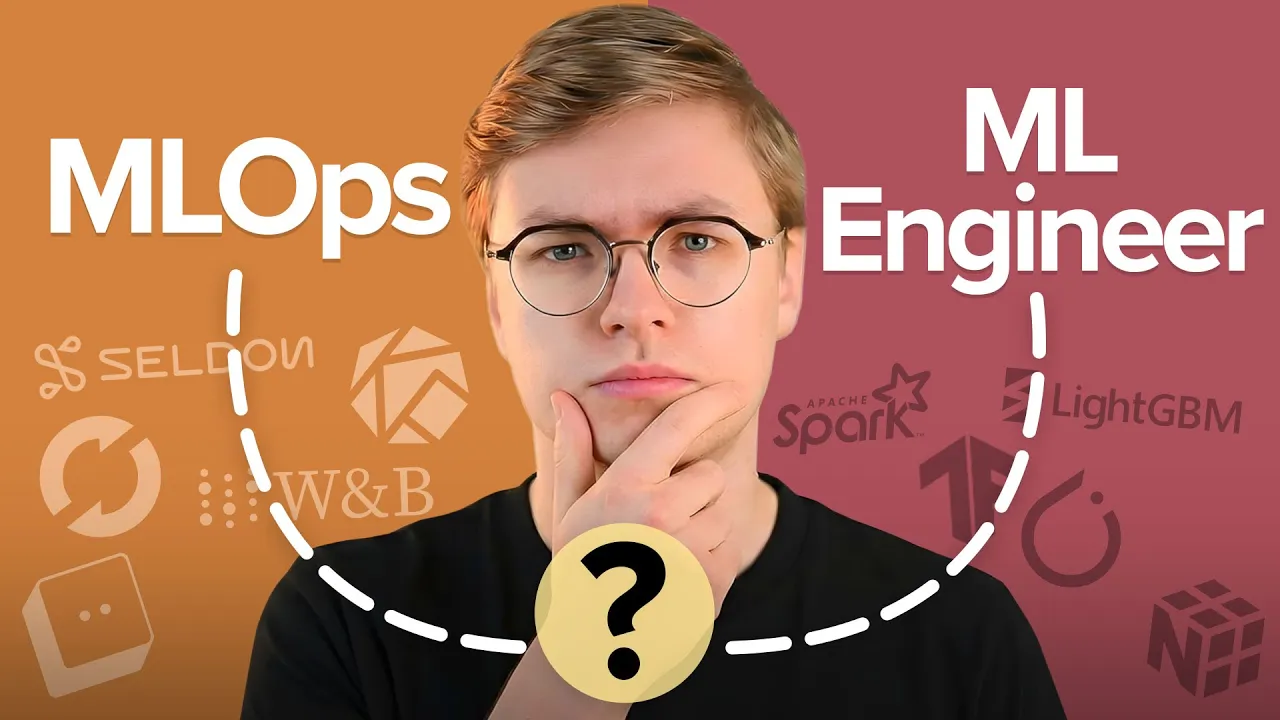
For the complete breakdown of MLOps, LLMOps, and how these career paths connect, watch the full comparison on YouTube. And if you want to connect with engineers building production AI systems, join the AI Engineering community where we share practical resources and hands-on support for your AI career.