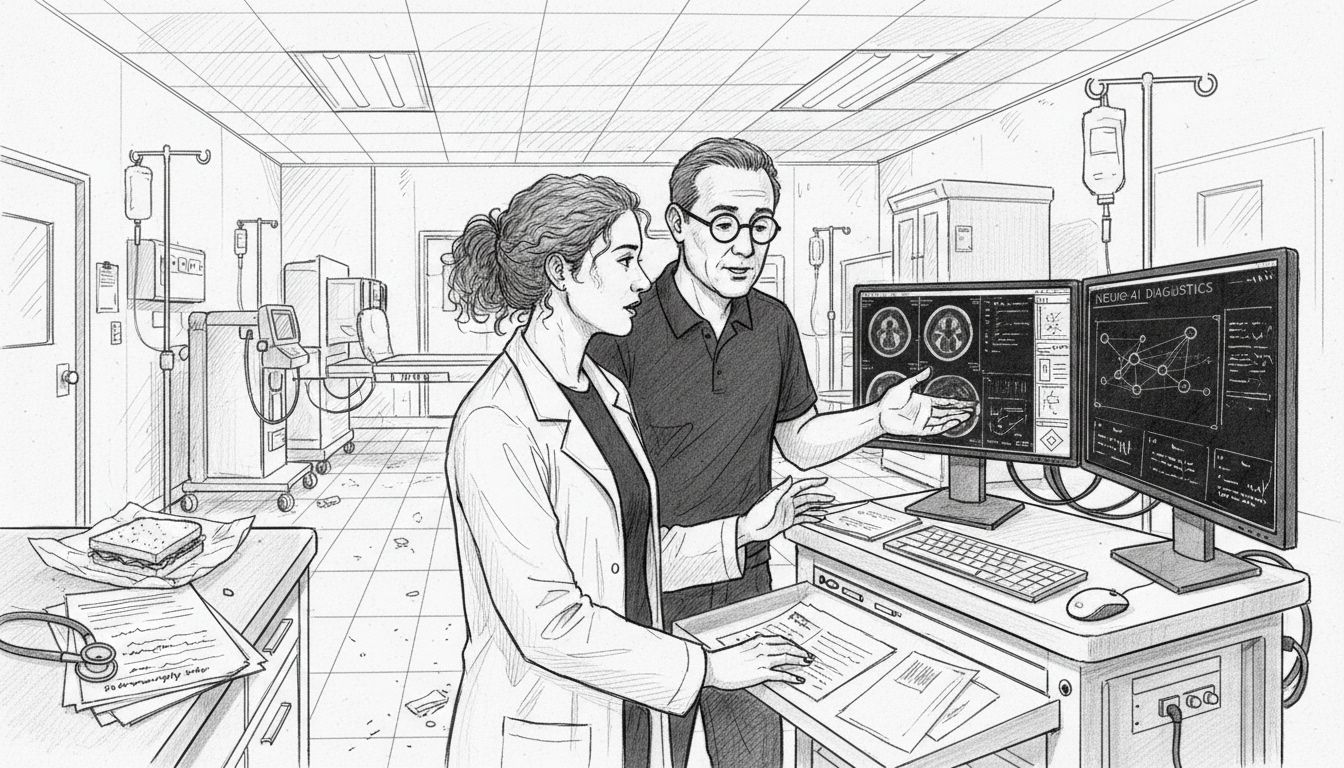
7 Practical Applications of AI in Medicine for Engineers
7 Practical Applications of AI in Medicine for Engineers
Finding the best ways to apply Artificial Intelligence in healthcare can feel overwhelming. With so many tools and new technologies, it’s easy to lose sight of what actually improves patient care and outcomes. You need clear, actionable steps that show how AI can make a real difference, whether you are a healthcare provider or an engineer building solutions.
This list reveals proven, research-backed strategies for using AI to enhance medical imaging, predict health risks, accelerate drug discovery, and personalize patient treatment. You’ll discover specific approaches that lead to faster diagnoses, smarter interventions, and more efficient clinical workflows. Follow these insights to unlock practical benefits that help you deliver better care and transform your healthcare projects.
Table of Contents
- AI-Powered Medical Imaging for Early Diagnosis
- Predictive Analytics to Improve Patient Outcomes
- AI-Enabled Drug Discovery and Development
- Automating Clinical Documentation with Natural Language Processing
- Personalized Treatment Plans Using Machine Learning
- Remote Patient Monitoring with Smart Devices
- Enhancing Telemedicine Through AI Chatbots
1. AI-Powered Medical Imaging for Early Diagnosis
Artificial Intelligence is revolutionizing medical imaging by enabling faster and more accurate disease detection across multiple healthcare specialties. Through advanced deep learning algorithms, AI is transforming how medical professionals diagnose complex conditions with unprecedented precision.
Key advantages of AI-powered medical imaging include:
- Rapid image analysis that reduces diagnostic waiting times
- Higher accuracy in detecting minute abnormalities
- Consistent performance across different imaging modalities
- Early detection of potential health risks before symptoms emerge
Deep learning technologies are particularly powerful in medical imaging applications. Convolutional neural networks can process complex medical scans exponentially faster than traditional human review methods. These algorithms learn from millions of previous medical images to identify subtle patterns that might escape human perception.
AI medical imaging technologies can detect potential health issues with over 95% accuracy in some diagnostic scenarios.
Engineers can contribute to this field by developing specialized machine learning models that integrate with existing medical imaging infrastructure. This involves creating robust algorithms capable of processing diverse imaging formats like X-rays, MRIs, CT scans, and ultrasound images.
Practical implementation requires collaboration between AI engineers, radiologists, and medical researchers. The goal is not to replace human expertise but to provide powerful diagnostic support tools that enhance medical decision making.
Pro tip: Focus on developing interpretable AI models that allow medical professionals to understand how diagnostic conclusions are reached.
2. Predictive Analytics to Improve Patient Outcomes
Predictive analytics represents a game-changing approach in healthcare technology where machine learning algorithms transform raw medical data into actionable insights. By analyzing complex patient information, these intelligent systems can forecast potential health risks and recommend proactive interventions.
Key benefits of predictive analytics include:
- Early disease detection before symptoms manifest
- Personalized treatment planning
- Resource optimization for healthcare systems
- Reduced healthcare costs through preventative measures
Machine learning models enable sophisticated pattern recognition across diverse medical datasets. Tree-based ensemble techniques and deep learning algorithms can process intricate patient histories to generate remarkably precise health predictions.
Predictive analytics can potentially reduce unnecessary medical procedures by up to 40% while improving patient outcomes.
Engineers can contribute by developing robust machine learning frameworks that integrate seamlessly with existing healthcare information systems. This requires creating models capable of handling diverse data types like electronic health records, genetic information, lifestyle data, and diagnostic test results.
Successful implementation demands a multidisciplinary approach combining medical expertise with advanced computational techniques. The goal is creating intelligent systems that support healthcare professionals rather than replacing their critical decision-making capabilities.
Pro tip: Focus on developing interpretable AI models that provide clear reasoning behind their predictive recommendations.
3. AI-Enabled Drug Discovery and Development
Artificial Intelligence is revolutionizing pharmaceutical research by dramatically accelerating the drug discovery and development process. Engineers play a critical role in creating intelligent systems that can transform how new medications are designed and tested.
Key advantages of AI in drug discovery include:
- Faster identification of potential drug candidates
- Reduced research and development costs
- More precise molecular design
- Enhanced prediction of drug interactions
Machine learning techniques enable researchers to analyze complex molecular structures and predict their potential therapeutic effectiveness with unprecedented speed. Deep learning and graph neural networks can process millions of molecular combinations in timeframes that would take traditional research teams years to complete.
AI-driven drug discovery can potentially reduce development timelines by up to 60% and lower research costs by approximately 40%.
Engineers can contribute by developing sophisticated algorithms capable of processing massive biochemical datasets. This involves creating machine learning models that can predict molecular behaviors, assess potential toxicity, and simulate drug interactions with remarkable accuracy.
Successful implementation requires interdisciplinary collaboration between AI engineers, biochemists, and pharmaceutical researchers. The goal is creating intelligent systems that augment human expertise rather than completely replacing scientific insight.
Pro tip: Develop expertise in both machine learning algorithms and biochemical modeling to maximize your impact in AI-driven drug discovery.
4. Automating Clinical Documentation with Natural Language Processing
Natural Language Processing is transforming clinical documentation by enabling intelligent systems that can generate accurate medical notes with minimal human intervention. This technology represents a breakthrough in reducing administrative burdens for healthcare professionals.
Key benefits of NLP in clinical documentation include:
- Rapid note generation
- Reduced transcription errors
- Improved patient record accuracy
- Significant time savings for medical staff
Advanced NLP techniques leverage large language models to interact with patient records and generate contextually precise clinical documentation. These systems use retrieval-augmented generation to create notes that capture nuanced medical details with remarkable precision.
AI-powered documentation systems can reduce clinician administrative time by up to 45% while maintaining high accuracy standards.
Engineers can contribute by developing sophisticated NLP models that understand medical terminology and context. This requires creating algorithms capable of processing complex medical language while maintaining patient privacy and data integrity.
Successful implementation demands a multidisciplinary approach combining machine learning expertise with deep understanding of medical communication standards. The goal is creating intelligent documentation tools that support healthcare professionals without compromising clinical accuracy.
Pro tip: Focus on developing NLP models with strong contextual understanding and built-in safeguards against potential information hallucinations.
5. Personalized Treatment Plans Using Machine Learning
Machine learning is revolutionizing healthcare by enabling highly customized medical treatment strategies tailored to individual patient profiles. These advanced algorithms can analyze complex medical data to recommend precise therapeutic approaches that traditional methods cannot achieve.
Key benefits of personalized treatment plans include:
- Targeted therapy selection
- Improved patient outcomes
- Reduced side effect risks
- More efficient healthcare resource allocation
Machine learning models can process multiple data points including genetic information, clinical history, and molecular profiles to generate nuanced treatment recommendations. Techniques like logistic regression and random forest algorithms enable clinicians to predict treatment effectiveness with unprecedented accuracy.
Personalized treatment plans can improve patient survival rates by up to 30% in complex medical conditions like cancer.
Engineers can contribute by developing robust machine learning frameworks capable of integrating diverse medical datasets while maintaining strict privacy and ethical standards. This requires creating algorithms that not only predict outcomes but also provide transparent reasoning for their recommendations.
Successful implementation demands interdisciplinary collaboration between data scientists, medical professionals, and AI engineers. The ultimate goal is creating intelligent systems that augment human expertise and provide more precise medical interventions.
Pro tip: Focus on developing explainable AI models that allow medical professionals to understand the reasoning behind treatment recommendations.
6. Remote Patient Monitoring with Smart Devices
Artificial Intelligence is transforming healthcare through sophisticated remote patient monitoring technologies that enable continuous health tracking and proactive medical interventions. Smart devices equipped with advanced sensors can now provide real-time health insights that were previously impossible to obtain.
Key advantages of AI-powered remote monitoring include:
- Continuous health data collection
- Early detection of potential health risks
- Reduced hospital readmission rates
- Personalized health interventions
AI-supported monitoring architectures leverage machine learning algorithms to analyze complex sensor networks and patient physiological data. These intelligent systems can detect subtle changes in health metrics that might indicate emerging medical conditions before they become critical.
Remote patient monitoring can potentially reduce healthcare costs by up to 50% while improving patient outcomes and treatment precision.
Engineers can contribute by developing robust sensor integration frameworks that prioritize data accuracy, privacy, and seamless communication between smart devices and healthcare systems. This requires creating sophisticated algorithms capable of processing diverse physiological signals with high reliability.
Successful implementation demands interdisciplinary collaboration between AI engineers, medical professionals, and device manufacturers. The ultimate goal is creating intelligent monitoring systems that provide comprehensive health insights while maintaining patient privacy and comfort.
Pro tip: Develop expertise in sensor fusion techniques and privacy-preserving machine learning to create more effective remote monitoring solutions.
7. Enhancing Telemedicine Through AI Chatbots
Artificial Intelligence is transforming telemedicine by introducing sophisticated chatbot technologies that provide instant, personalized medical support to patients worldwide. These intelligent systems can dramatically improve healthcare accessibility and patient engagement through advanced natural language processing capabilities.
Key benefits of AI chatbots in telemedicine include:
- 24/7 patient support availability
- Rapid symptom triage and assessment
- Reduced healthcare system wait times
- Personalized patient communication
AI-based medical chatbots leverage machine learning and natural language processing to understand complex patient inquiries and provide contextually appropriate medical guidance. These systems can analyze patient symptoms, recommend initial care strategies, and seamlessly route complex cases to human medical professionals.
AI telemedicine chatbots can potentially reduce healthcare system workload by up to 40% while improving patient access to medical information.
Engineers can contribute by developing robust conversational AI models that balance technical accuracy with empathetic communication. This requires creating algorithms capable of understanding medical terminology, patient context, and delivering compassionate, reliable health guidance.
Successful implementation demands interdisciplinary collaboration between AI engineers, medical professionals, and linguists. The goal is creating intelligent chatbot systems that provide reliable, accessible healthcare support while maintaining patient privacy and trust.
Pro tip: Focus on developing multilingual and culturally sensitive AI chatbot frameworks to maximize healthcare accessibility across diverse populations.
Below is a comprehensive table summarizing the innovations and applications highlighted in the article regarding Artificial Intelligence advancements in medical fields.
| Topic | Key Points | Benefits |
|---|---|---|
| AI in Medical Imaging | Utilizes deep learning for fast, precise image analysis across modalities. | Improves early disease detection accuracy. |
| Predictive Analytics | Analyzes patient data for forecasting and preventative strategies. | Enhances outcomes and reduces costs. |
| AI in Drug Discovery | Facilitates molecular analysis and predictive modeling for therapeutic effectiveness. | Accelerates drug development timelines. |
| Clinical Documentation with NLP | Employs natural language processing for efficient and accurate recordkeeping. | Saves time and decreases transcription errors. |
| Personalized Treatment Planning | Integrates medical data for tailored therapeutic approaches. | Improves patient-specific care efficiency. |
| Remote Patient Monitoring | Utilizes smart devices for continuous health tracking and proactive interventions. | Reduces hospital readmission rates. |
| AI Chatbots in Telemedicine | Provides instant healthcare support and symptom analysis using conversational AI. | Enhances accessibility to medical advice. |
Unlock Your Potential to Revolutionize Healthcare with AI Engineering
The applications covered in this article highlight the critical challenges of integrating AI innovations like medical imaging, predictive analytics, and natural language processing into real-world healthcare systems. These cutting-edge fields demand not just theoretical knowledge but hands-on skills to build interpretable, reliable, and ethical AI tools that can transform patient care and drug discovery. If you are passionate about solving these complex problems and making a high-impact difference in medicine, you need an immersive learning environment designed for aspiring AI engineers.
Want to learn exactly how to build AI systems for healthcare applications? Join the AI Engineering community where I share detailed tutorials, code examples, and work directly with engineers building medical AI systems.
Inside the community, you’ll find practical, results-driven healthcare AI strategies that actually work for growing companies, plus direct access to ask questions and get feedback on your implementations.
Frequently Asked Questions
How can engineers contribute to AI-powered medical imaging?
Engineers can enhance AI-powered medical imaging by developing specialized machine learning models that integrate with existing imaging systems. Focus on creating algorithms that can process various imaging formats like X-rays and MRIs to improve diagnostic speed and accuracy.
What role do engineers play in predictive analytics for healthcare?
Engineers play a crucial role by developing machine learning frameworks that analyze complex patient data to generate actionable insights. Start by creating models capable of handling diverse datasets, such as electronic health records and genetic information, to improve patient outcomes within your projects.
How can AI enhance telemedicine applications?
AI can enhance telemedicine by enabling advanced chatbot technologies that provide 24/7 patient support and rapid symptom assessment. As an engineer, you could design conversational AI models that understand medical inquiries and deliver personalized care recommendations to optimize patient engagement.
What skills do engineers need for automating clinical documentation with NLP?
To automate clinical documentation with Natural Language Processing, engineers should develop expertise in creating NLP models that comprehend medical terminology and context. Begin by focusing on building algorithms that can generate accurate medical notes efficiently, aiming to reduce clinician administrative time by up to 45%.
How can remote patient monitoring systems utilize AI effectively?
Remote patient monitoring systems can utilize AI by analyzing real-time health data collected from smart devices to detect potential health risks early. Engineers should develop robust sensor frameworks and algorithms that ensure data accuracy and privacy, aiming to enhance health insights and patient outcomes significantly.
What are the key benefits of using machine learning for personalized treatment plans?
Machine learning enables personalized treatment plans by analyzing comprehensive data points to recommend targeted therapies. Engineers can contribute by developing frameworks that integrate diverse medical data, focusing on improving treatment effectiveness and potentially increasing patient survival rates by up to 30%.
Recommended
- 7 Essential Applications of AI in Real Life for Engineers
- 7 Essential Applications of Computer Vision for AI Engineers
- 7 Essential Applications of Computer Vision for AI Engineers
- Understanding AI for Social Good Impact and Applications
- Importance of AI for Job Candidates: Complete Guide