AI Edge Engineer Jobs
Built for Hardware-Native Engineers
On-device inference is moving AI off the cloud and onto constrained silicon.
The companies hiring for it need engineers who think in milliwatts and milliseconds, not just model accuracy.
You Can See the Edge AI Wave Coming.
You Just Can't Tell Which Door to Knock On.
Job listings say AI edge engineer but the requirements read like three different jobs stitched together, and you cannot tell which skills actually get you hired.
Every posting seems to want a research background, even though the real work is quantizing models and squeezing them onto a microcontroller.
You keep learning generic ML tutorials that train models in notebooks, then deploy nothing to the kind of devices edge teams actually ship.
Edge AI Hiring Rewards Deployment Skill, Not Research Pedigree.
The World-Class AI Engineer Cohort
AI edge engineer roles exist because cloud inference is too slow, too expensive, and too private to run everywhere. Teams need people who can take a trained model, compress it, quantize it, and run it reliably on a phone, sensor, or industrial controller. If you already understand memory budgets, latency, and power constraints, you are closer to this role than most data scientists will ever be. The path is about positioning what you know and filling a few targeted gaps, not starting over.
Decode the Listings
Learn to read AI edge engineer postings and spot which ones value hardware fluency over ML research.
Ship to a Device
Build one deployment that runs a real model on constrained hardware, the proof edge teams hire on.
Position the Hybrid
Frame your embedded plus AI combination as the rare profile these teams cannot find elsewhere.
Meet Your Mentor

My aim has been the same for years: become a world-class AI engineer. Every career move I've made has been measured against that.
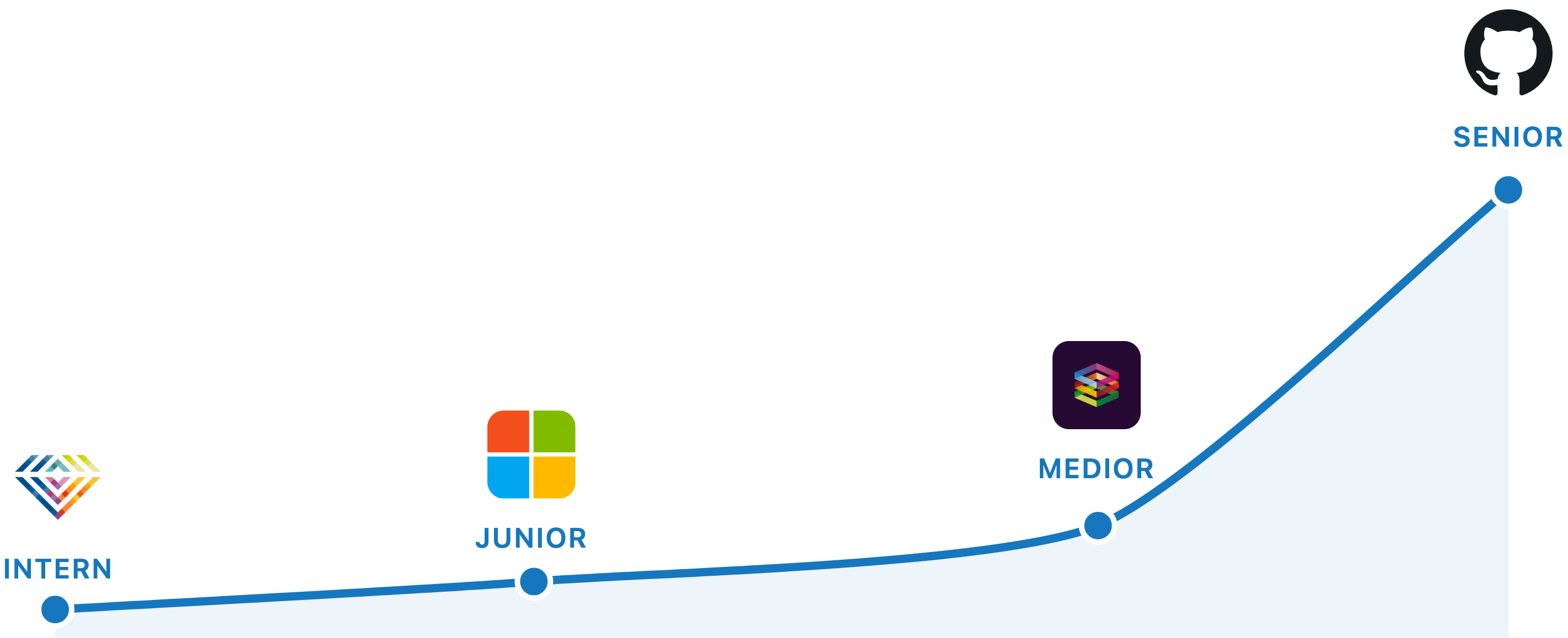
I started as a software tester on a $500/month internship in the Netherlands. Taught myself to code, learned to ship real systems, and worked my way to Senior Engineer at GitHub.
Then I left GitHub. I joined an AI research lab as Member of Technical Staff, where I currently build products for secure AI monitoring.
The cohort draws directly from my real experience so you can make progress fast.
I run this special cohort with only a few people because hands-on work with me is what it takes to bring you to become a world-class AI engineer.
Real Results

Vittor
AI Engineer
Built and deployed his portfolio piece, then landed the AI role
"The coaching played a huge part in my success. I focused on AI fundamentals, the certification path, and soft skills like professional writing. Having access to expert guidance gave me confidence during interviews and helped me feel I was on the right path.
I built my own platform (simple but functional) and deployed it on AWS. I used it in my portfolio and showcased it during interviews. The way complex topics were explained, especially the restaurant analogy for AI systems, really stuck with me. Focusing on doing the basics well was absolutely essential."
What You Will Get
8 Weekly Tuesday Sessions
3 hours each for 24 live hours total.
Project Scoping at Kickoff
We set the scope of what you'll ship and the milestones to get there before the live sessions start.
Code Reviews
Reviews of your code from Zen during the cohort.
Lifetime Demo Access
Every architecture demo is recorded and yours to keep.
Demo Day
You present what you built and get feedback from Zen, with a recording you can use in your portfolio.
12 Months Community Access
Included with the cohort.
Edge AI Job Postings Are Multiplying Faster Than Qualified Candidates in 2026
Frequently Asked Questions
What does an AI edge engineer actually do?
An AI edge engineer takes machine learning models and makes them run on devices instead of in the cloud. That means phones, wearables, IoT sensors, cameras, vehicles, and industrial controllers. The work centers on getting acceptable accuracy out of a model that has to fit inside tight memory, power, and latency budgets. Day to day, that looks like quantizing models, pruning them, choosing the right runtime such as TensorFlow Lite, ONNX Runtime, or a vendor accelerator, profiling on real silicon, and debugging the gap between how a model behaves in a notebook and how it behaves on hardware. It sits squarely between ML and embedded engineering, which is why people from a hardware background often outperform pure data scientists in these roles.
What skills do AI edge engineer jobs ask for?
Most AI edge engineer listings combine three buckets. First, hardware awareness: memory management, power and latency constraints, and comfort reading a datasheet. Second, model optimization: quantization, pruning, and conversion to edge runtimes like TensorFlow Lite, ONNX, or CoreML. Third, enough ML fluency to understand what a model does and why it degrades after compression. Notice what is usually absent from the list: original research, novel architectures, and publication records. That is the signal. These teams want deployment engineers, and if you came from embedded, firmware, or mobile, you already cover the first bucket that data scientists struggle with most.
How much do AI edge engineer jobs pay in 2026?
AI edge engineer compensation generally lands in the 150K to 220K range for mid-level roles in 2026, with senior and specialist positions reaching 250K and above at companies building AI silicon or shipping on-device intelligence at scale. The premium exists because the candidate pool is thin. Plenty of engineers can train a model and plenty can write firmware, but the overlap who can do both is rare, and that scarcity is what pushes pay above either specialty alone. Engineers who can credibly demonstrate a working on-device deployment tend to command the upper end of these ranges.
Do I need a machine learning degree to get an AI edge engineer job?
No. The companies hiring AI edge engineers are filtering for people who can ship inference onto real hardware, and that skill set rewards engineering judgment over academic credentials. If you have a background in embedded systems, firmware, mobile, or any role where you fought for memory and latency, you already hold the harder half of the job. The ML side you need is deployment focused: quantization, model compression, runtime selection, and on-device profiling. That is learnable in months, not years, and it is exactly what gets edge candidates hired.
How much time will this take?
You'll spend 3 hours every Tuesday in the live session and roughly 3 hours of async work in between, for 8 weeks. The Tuesday session time is fixed.
What does it cost?
It's a four-figure investment that we discuss during the 30-minute consult, alongside whether the cohort is the right fit for your project.
I've signed up for cohorts before and dropped out. How is this different?
It probably isn't, and you should hold the money. Most cohort dropouts are people who couldn't articulate what they were shipping when they signed up. That's why the consult exists, and why I turn down most applications. If we get on the call and you can't tell me what you'll have shipped at the end of week 8, I'll point you to the AI Native Engineer community until you can.
I'm not pivoting careers. I want to build a product. Does this still work?
Yes, the cohort works for people shipping their first serious AI system whether the goal is to land a senior role or to launch a product. The shipped system serves both equally well.
Can I do this while working full-time?
Yes, most attendees do. The live session is one Tuesday a week and the async work fits around your existing schedule, as long as you can carve out roughly 6 hours a week.
I accept those who have the highest chance of success.
In the 30-minute call we discuss your goals and whether you are ready for the program.