AI Interview Common Mistakes:
What Gets Candidates Rejected
Most candidates fail for predictable reasons.
Learn what mistakes to avoid and how to stand out.
Avoidable Mistakes
Kill Good Candidates
Strong engineers fail interviews because they don't know what's evaluated—skill alone isn't enough.
Communication failures—solving the problem but failing to explain your thinking clearly.
Misreading the room—giving startup answers in enterprise interviews or vice versa.
Avoid These Common Mistakes
The World-Class AI Engineer Cohort
Understanding what gets candidates rejected helps you stand out. These are the mistakes I've seen repeatedly across AI engineering interviews.
Know What's Evaluated
Understand that communication and process matter as much as solutions
Practice Out Loud
Mock interviews reveal communication gaps you don't notice alone
Research the Company
Tailor your answers to startup vs enterprise vs big tech expectations
Stay Calm Under Pressure
Getting flustered by hard questions is the #1 way candidates fail
Meet Your Mentor

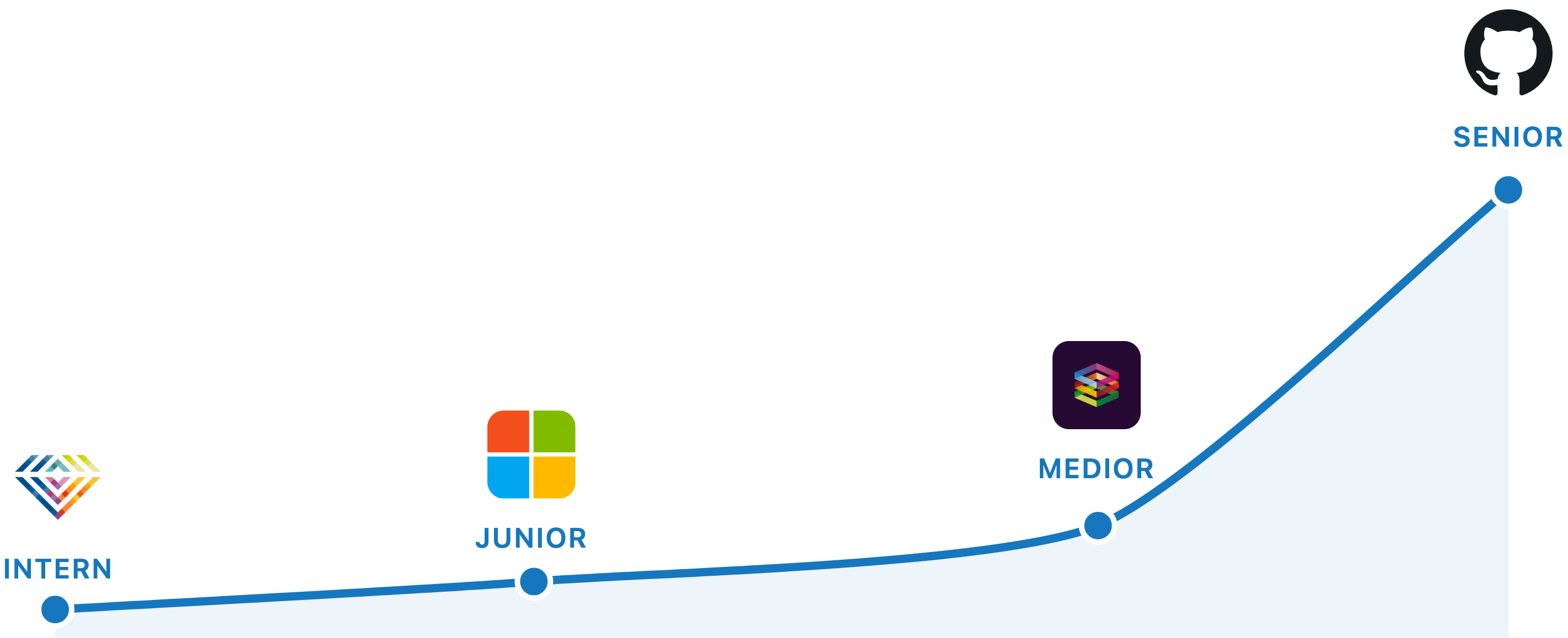
My aim has been the same for years: become a world-class AI engineer. Every career move I've made has been measured against that.
I started as a software tester on a $500/month internship in the Netherlands. Taught myself to code, learned to ship real systems, and worked my way to Senior Engineer at GitHub.
Then I left GitHub. I joined an AI research lab as Member of Technical Staff, where I currently build products for secure AI monitoring.
The cohort draws directly from my real experience so you can make progress fast.
I run this special cohort with only a few people because hands-on work with me is what it takes to bring you to become a world-class AI engineer.
Real Results
Vittor
AI Engineer
Built and deployed his portfolio piece, then landed the AI role
"The coaching played a huge part in my success. I focused on AI fundamentals, the certification path, and soft skills like professional writing. Having access to expert guidance gave me confidence during interviews and helped me feel I was on the right path.
I built my own platform (simple but functional) and deployed it on AWS. I used it in my portfolio and showcased it during interviews. The way complex topics were explained, especially the restaurant analogy for AI systems, really stuck with me. Focusing on doing the basics well was absolutely essential."
What You Will Get
8 Weekly Tuesday Sessions
3 hours each for 24 live hours total.
Project Scoping at Kickoff
We set the scope of what you'll ship and the milestones to get there before the live sessions start.
Code Reviews
Reviews of your code from Zen during the cohort.
Lifetime Demo Access
Every architecture demo is recorded and yours to keep.
Demo Day
You present what you built and get feedback from Zen, with a recording you can use in your portfolio.
12 Months Community Access
Included with the cohort.
Don't Let Avoidable Mistakes Cost You the Offer.
Frequently Asked Questions
What are the most common coding interview mistakes for AI roles?
Top coding mistakes: (1) Jumping into code without clarifying requirements—always ask questions first, (2) Silent coding—you must explain your thinking, even if it feels awkward, (3) Not testing—run through examples before saying you're done, (4) Giving up on hard problems—partial progress with clear thinking beats silence, (5) Over-engineering—sometimes brute force is fine to start, (6) Ignoring edge cases—null inputs, empty arrays, negative numbers, (7) Bad variable names—'x' and 'temp' hurt readability. The pattern: most mistakes are about process and communication, not raw coding ability.
What system design mistakes cost AI engineers job offers?
System design red flags: (1) Jumping to components without understanding requirements—start with clarifying questions, (2) Going too deep too fast—establish the high-level architecture first, (3) Ignoring scale requirements—'how many users?' matters for your design, (4) No trade-off discussion—every design decision has pros and cons, (5) Forgetting operational concerns—monitoring, failure modes, cost, (6) Over-engineering for AI roles—not every problem needs distributed systems, (7) Not drawing diagrams—visual communication is part of the evaluation. System design tests structured thinking and communication as much as technical knowledge.
What behavioral interview mistakes should AI candidates avoid?
Behavioral red flags: (1) Vague answers—'I worked with the team' vs specific actions you took, (2) No STAR structure—rambling stories lose the interviewer, (3) Taking all the credit—'I' is fine but acknowledge team contributions, (4) Only positive stories—failure stories with learning show self-awareness, (5) Badmouthing previous employers—even if justified, it looks bad, (6) Not preparing enough stories—scrambling to find examples mid-interview, (7) Stories that don't match the question—listen carefully to what's being asked. Practice 10-15 stories and map them to common behavioral questions.
What AI-specific interview mistakes should I avoid?
AI interview red flags: (1) Not knowing your own projects deeply—you built it, you should explain every decision, (2) Overstating capabilities—saying your RAG system had 95% accuracy without metrics to back it up, (3) Confusing AI hype with reality—know the limitations of current LLM technology, (4) No production experience—if all your AI work is notebooks, that's a gap, (5) Can't explain trade-offs—why did you choose GPT-4 over Claude? Why this embedding model?, (6) No cost awareness—production AI has real cost implications, (7) Ignoring evaluation—how did you measure if your system actually works?
What general interview mistakes hurt AI engineering candidates?
Universal interview mistakes: (1) Poor time management—arriving late (even 1 minute) starts you negative, (2) No questions for the interviewer—signals low interest, (3) Appearing desperate—desperation repels, confidence attracts, (4) Not researching the company—basic questions about what they do are embarrassing, (5) Negative body language—crossed arms, no eye contact, fidgeting, (6) Over-talking—concise answers beat rambling ones, (7) Under-preparing—'winging it' rarely works for competitive roles, (8) Not following up—a thank-you email is still expected.
I've signed up for cohorts before and dropped out. How is this different?
It probably isn't, and you should hold the money. Most cohort dropouts are people who couldn't articulate what they were shipping when they signed up. That's why the consult exists, and why I turn down most applications. If we get on the call and you can't tell me what you'll have shipped at the end of week 8, I'll point you to the AI Native Engineer community until you can.
I'm not pivoting careers. I want to build a product. Does this still work?
Yes, the cohort works for people shipping their first serious AI system whether the goal is to land a senior role or to launch a product. The shipped system serves both equally well.
Do I need prior AI experience?
You need to be able to code in Python or TypeScript. Complete beginners can follow the classroom they get access to before the cohort sessions to come in well-prepared.
How much time will this take?
You'll spend 3 hours every Tuesday in the live session and roughly 3 hours of async work in between, for 8 weeks. The Tuesday session time is fixed.
What does it cost?
It's a four-figure investment that we discuss during the 30-minute consult, alongside whether the cohort is the right fit for your project.
Can I do this while working full-time?
Yes, most attendees do. The live session is one Tuesday a week and the async work fits around your existing schedule, as long as you can carve out roughly 6 hours a week.
I accept those who have the highest chance of success.
In the 30-minute call we discuss your goals and whether you are ready for the program.