Big Tech AI Interview Guide:
How to Get Hired at FAANG
Big tech AI interviews are rigorous but predictable.
Learn the process, prepare systematically, and land the offer.
Big Tech Interviews
Have Different Rules
The multi-round process (5-7 interviews) is overwhelming without understanding what each round evaluates.
Leveling decisions can move you from L5 to L4, costing $100K+ in compensation—you need to interview at your target level.
Committee-based decisions mean you need to impress multiple interviewers, not just one hiring manager.
Master the Big Tech Interview Process
The World-Class AI Engineer Cohort
Big tech interviews follow predictable patterns: coding, system design, behavioral, and AI-specific rounds. Prepare for each round systematically and you'll outperform most candidates.
Understand the Process
Know what to expect: recruiter screen, phone screen, virtual onsite, team matching
Prepare Coding Rounds
LeetCode medium-hard, focus on clean code and communication, not just solutions
Master System Design
Practice AI-specific system design: RAG pipelines, model serving, real-time inference
Nail Behavioral Rounds
Prepare STAR stories for leadership principles and demonstrate senior-level impact
Meet Your Mentor

My aim has been the same for years: become a world-class AI engineer. Every career move I've made has been measured against that.
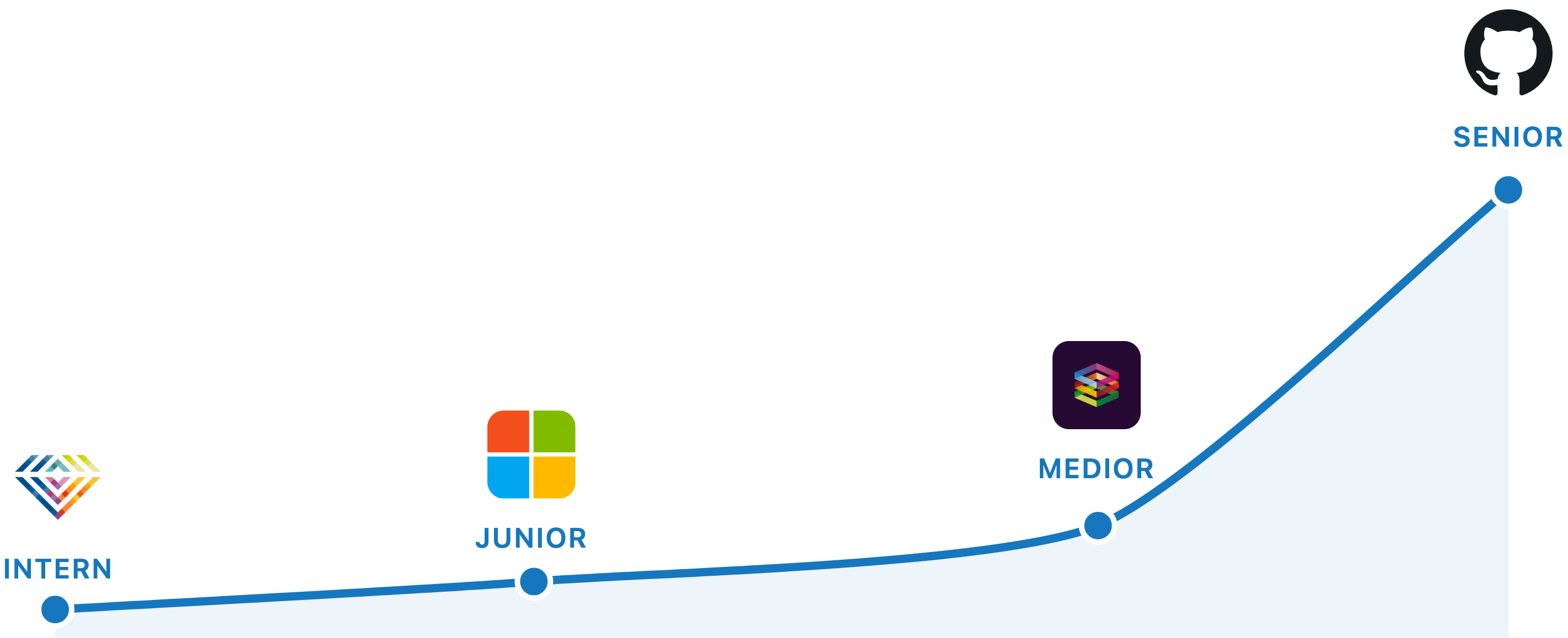
I started as a software tester on a $500/month internship in the Netherlands. Taught myself to code, learned to ship real systems, and worked my way to Senior Engineer at GitHub.
Then I left GitHub. I joined an AI research lab as Member of Technical Staff, where I currently build products for secure AI monitoring.
The cohort draws directly from my real experience so you can make progress fast.
I run this special cohort with only a few people because hands-on work with me is what it takes to bring you to become a world-class AI engineer.
Real Results

Vittor
AI Engineer
Built and deployed his portfolio piece, then landed the AI role
"The coaching played a huge part in my success. I focused on AI fundamentals, the certification path, and soft skills like professional writing. Having access to expert guidance gave me confidence during interviews and helped me feel I was on the right path.
I built my own platform (simple but functional) and deployed it on AWS. I used it in my portfolio and showcased it during interviews. The way complex topics were explained, especially the restaurant analogy for AI systems, really stuck with me. Focusing on doing the basics well was absolutely essential."
What You Will Get
8 Weekly Tuesday Sessions
3 hours each for 24 live hours total.
Project Scoping at Kickoff
We set the scope of what you'll ship and the milestones to get there before the live sessions start.
Code Reviews
Reviews of your code from Zen during the cohort.
Lifetime Demo Access
Every architecture demo is recorded and yours to keep.
Demo Day
You present what you built and get feedback from Zen, with a recording you can use in your portfolio.
12 Months Community Access
Included with the cohort.
Big Tech Compensation Is Life-Changing. Prepare Thoroughly.
Frequently Asked Questions
What is the typical big tech AI interview process?
Most big tech companies follow this process: (1) Recruiter screen (30 min) - background and interest, (2) Phone/video technical screen (45-60 min) - coding or system design, (3) Virtual onsite (4-6 hours) - coding, system design, behavioral, AI-specific rounds, (4) Debrief and committee review, (5) Team matching (Google, Meta) or hiring manager decision (Amazon, Microsoft), (6) Offer negotiation. Total timeline: 4-8 weeks from application to offer.
How should I prepare for coding rounds at big tech AI roles?
Focus areas: (1) LeetCode medium problems (200+ solved) with emphasis on arrays, trees, graphs, dynamic programming, (2) Python proficiency for AI roles (most preferred language), (3) Clean code practices—meaningful names, proper structure, edge case handling, (4) Communication—explain your thought process, ask clarifying questions, discuss trade-offs. Big tech values how you solve problems as much as whether you solve them. Practice mock interviews with time pressure.
What AI system design questions do big tech companies ask?
Common AI system design questions: Design a recommendation system (Netflix, Amazon), Design a search ranking system (Google), Design a content moderation system (Meta), Design a fraud detection system (Stripe, Square), Design a real-time translation system (Google), Design a RAG-powered knowledge base. For each: discuss data pipelines, model serving, latency requirements, scaling strategies, monitoring, and failure modes. Practice drawing diagrams and explaining trade-offs.
How do behavioral interviews differ at big tech companies?
Each company has different values: Amazon uses Leadership Principles (16 specific principles with 2-3 questions each), Google focuses on 'Googleyness' (collaboration, ambiguity tolerance), Meta emphasizes 'Move Fast' and impact, Microsoft values growth mindset and collaboration. Prepare 10-15 STAR stories covering: conflict resolution, failure and learning, leadership without authority, ambiguous situations, cross-team collaboration. Map your stories to each company's specific values.
How does leveling work at big tech companies and why does it matter?
Levels determine compensation (L4 vs L5 can be $100-200K difference). Typical AI engineer levels: L3/E3 (entry), L4/E4 (mid), L5/E5 (senior), L6/E6 (staff). Leveling is determined by: scope of past work, autonomy demonstrated, technical leadership examples, communication quality. Interview at the level you want—demonstrate senior-level scope even if your current title is 'mid-level.' Ask your recruiter what level you're being considered for.
How long should I prepare for big tech AI interviews?
Recommended timeline: 2-3 months for thorough preparation. Week 1-4: LeetCode grinding (2-3 problems daily), Week 5-6: System design practice (2-3 full sessions), Week 7-8: Behavioral prep and company-specific research, Week 9-10: Mock interviews (at least 3-5), Week 11-12: Light review and confidence building. If you're already strong in one area, reallocate time accordingly. Don't interview tired—take breaks during prep.
I've signed up for cohorts before and dropped out. How is this different?
It probably isn't, and you should hold the money. Most cohort dropouts are people who couldn't articulate what they were shipping when they signed up. That's why the consult exists, and why I turn down most applications. If we get on the call and you can't tell me what you'll have shipped at the end of week 8, I'll point you to the AI Native Engineer community until you can.
I'm not pivoting careers. I want to build a product. Does this still work?
Yes, the cohort works for people shipping their first serious AI system whether the goal is to land a senior role or to launch a product. The shipped system serves both equally well.
Do I need prior AI experience?
You need to be able to code in Python or TypeScript. Complete beginners can follow the classroom they get access to before the cohort sessions to come in well-prepared.
How much time will this take?
You'll spend 3 hours every Tuesday in the live session and roughly 3 hours of async work in between, for 8 weeks. The Tuesday session time is fixed.
What does it cost?
It's a four-figure investment that we discuss during the 30-minute consult, alongside whether the cohort is the right fit for your project.
Can I do this while working full-time?
Yes, most attendees do. The live session is one Tuesday a week and the async work fits around your existing schedule, as long as you can carve out roughly 6 hours a week.
I accept those who have the highest chance of success.
In the 30-minute call we discuss your goals and whether you are ready for the program.