Entry-Level AI Engineer Jobs
Your Path In Starts Here.
Entry-level AI roles exist, but competition is fierce.
Learn how to stand out when everyone wants the same job.
The Entry-Level Paradox Is Real.
Every 'entry-level' posting requires 2+ years experience. How do you get experience without a job?
Hundreds of applicants per role. Your resume disappears into the void alongside everyone else's.
Job requirements are all over the place. PyTorch? TensorFlow? LLMs? You're unsure what skills actually matter.
Break Through the Noise.
The World-Class AI Engineer Cohort
The candidates who land entry-level AI roles don't just apply and hope. They build proof of work, make real connections, and position themselves strategically. Here's how to do exactly that.
Build Real Projects
Portfolio that proves you can ship
Network Strategically
Get referrals, not just applications
Get Guided Support
Coaching to accelerate your path
Meet Your Mentor

My aim has been the same for years: become a world-class AI engineer. Every career move I've made has been measured against that.
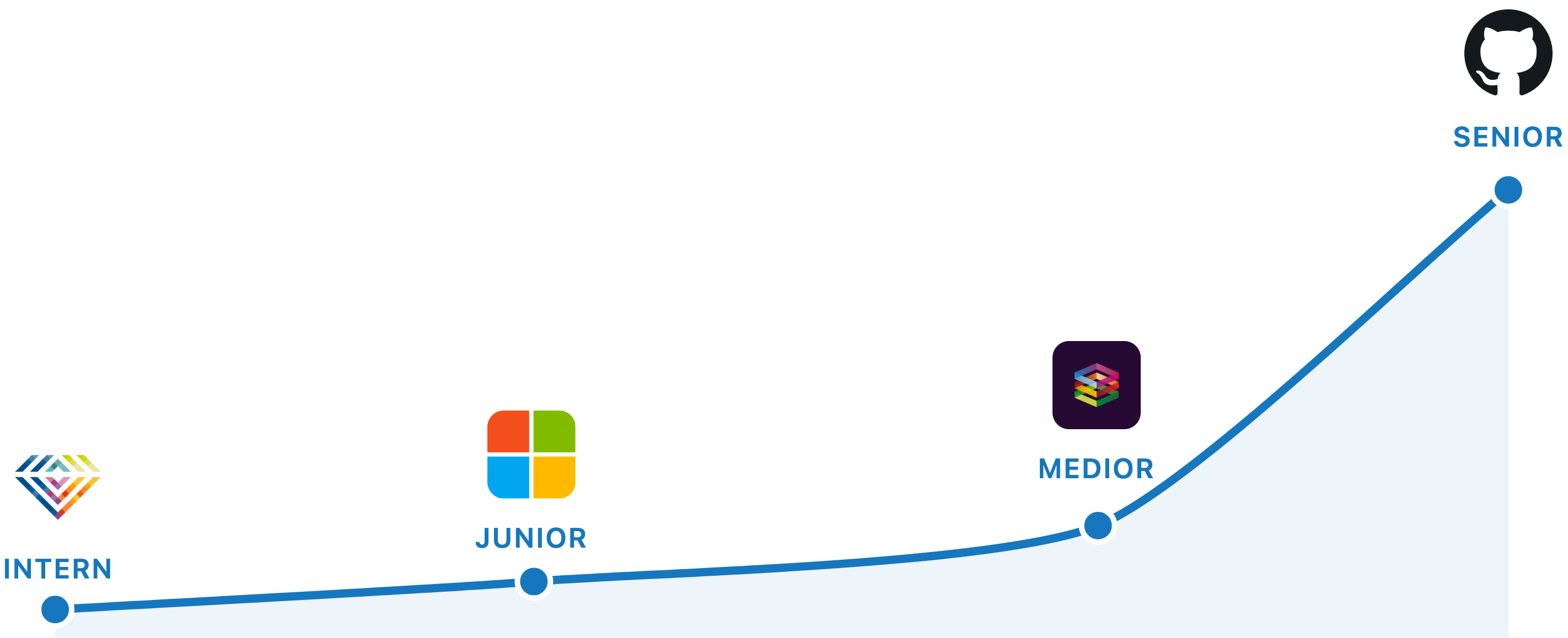
I started as a software tester on a $500/month internship in the Netherlands. Taught myself to code, learned to ship real systems, and worked my way to Senior Engineer at GitHub.
Then I left GitHub. I joined an AI research lab as Member of Technical Staff, where I currently build products for secure AI monitoring.
The cohort draws directly from my real experience so you can make progress fast.
I run this special cohort with only a few people because hands-on work with me is what it takes to bring you to become a world-class AI engineer.
Real Results

Vittor
AI Engineer
Built and deployed his portfolio piece, then landed the AI role
"The coaching played a huge part in my success. I focused on AI fundamentals, the certification path, and soft skills like professional writing. Having access to expert guidance gave me confidence during interviews and helped me feel I was on the right path.
I built my own platform (simple but functional) and deployed it on AWS. I used it in my portfolio and showcased it during interviews. The way complex topics were explained, especially the restaurant analogy for AI systems, really stuck with me. Focusing on doing the basics well was absolutely essential."
What You Will Get
8 Weekly Tuesday Sessions
3 hours each for 24 live hours total.
Project Scoping at Kickoff
We set the scope of what you'll ship and the milestones to get there before the live sessions start.
Code Reviews
Reviews of your code from Zen during the cohort.
Lifetime Demo Access
Every architecture demo is recorded and yours to keep.
Demo Day
You present what you built and get feedback from Zen, with a recording you can use in your portfolio.
12 Months Community Access
Included with the cohort.
Every Month You Wait, More Graduates Enter the Market
Frequently Asked Questions
How do I get an entry-level AI job without prior experience?
The 'experience required' on job postings is often a wishlist, not a hard requirement. Companies hire entry-level candidates who demonstrate capability through other means: strong portfolio projects, open-source contributions, relevant internships, or impressive personal projects. Focus on building 2-3 substantial projects that solve real problems. Document your process, show your thinking, and deploy them publicly. This counts as experience in hiring managers' eyes.
What skills do I actually need for entry-level AI engineer jobs?
In 2026, entry-level AI roles typically want: 1) Python proficiency with data manipulation (pandas, numpy), 2) Understanding of ML fundamentals (supervised/unsupervised learning, model evaluation), 3) Familiarity with at least one deep learning framework (PyTorch preferred), 4) Basic experience with LLMs and prompt engineering, 5) Git and basic software engineering practices. You don't need to be an expert in everything, but you need enough depth in a few areas to contribute from day one.
Do I need a CS degree or Masters for entry-level AI roles?
Not necessarily. While some companies filter by degree, many startups and forward-thinking companies hire based on demonstrated skills. A strong portfolio, relevant certifications, and practical experience can outweigh formal credentials. That said, a technical background (engineering, physics, math) helps. If you're a career changer from a non-technical field, you'll need to work harder to prove your technical abilities through projects and contributions.
What projects should I build for my AI portfolio?
Avoid the typical Titanic or MNIST projects everyone has. Instead, build projects that: 1) Solve a real problem you care about, 2) Use current technologies (LLMs, RAG systems, fine-tuning), 3) Are deployed and usable (not just notebooks), 4) Show end-to-end thinking (problem definition, data, model, deployment). Example: Build a RAG-based assistant for a specific domain, deploy it, and write about what you learned. One great project beats ten tutorials.
What salary can I expect for entry-level AI engineer positions?
Entry-level AI engineer salaries in 2026 typically range from $90K-$140K depending on location, company size, and your specific skills. Major tech hubs (SF, NYC, Seattle) pay at the higher end but have higher costs of living. Remote roles often pay 10-20% less but offer flexibility. Startups might offer lower base salary but include equity. Your negotiating power increases significantly with a strong portfolio and competing offers.
How can coaching help me land an entry-level AI job faster?
Self-study works, but it's slow and you don't know what you don't know. Coaching provides: 1) A personalized roadmap based on your current skills and target roles, 2) Accountability to actually complete projects instead of endless tutorial loops, 3) Insider knowledge on what hiring managers look for, 4) Resume and portfolio review from someone who's hired AI engineers, 5) Mock interviews and feedback. Most candidates who work with me land roles 2-3 months faster than they would alone.
I've signed up for cohorts before and dropped out. How is this different?
It probably isn't, and you should hold the money. Most cohort dropouts are people who couldn't articulate what they were shipping when they signed up. That's why the consult exists, and why I turn down most applications. If we get on the call and you can't tell me what you'll have shipped at the end of week 8, I'll point you to the AI Native Engineer community until you can.
I'm not pivoting careers. I want to build a product. Does this still work?
Yes, the cohort works for people shipping their first serious AI system whether the goal is to land a senior role or to launch a product. The shipped system serves both equally well.
Do I need prior AI experience?
You need to be able to code in Python or TypeScript. Complete beginners can follow the classroom they get access to before the cohort sessions to come in well-prepared.
How much time will this take?
You'll spend 3 hours every Tuesday in the live session and roughly 3 hours of async work in between, for 8 weeks. The Tuesday session time is fixed.
What does it cost?
It's a four-figure investment that we discuss during the 30-minute consult, alongside whether the cohort is the right fit for your project.
Can I do this while working full-time?
Yes, most attendees do. The live session is one Tuesday a week and the async work fits around your existing schedule, as long as you can carve out roughly 6 hours a week.
I accept those who have the highest chance of success.
In the 30-minute call we discuss your goals and whether you are ready for the program.