Python Skills for AI Jobs
What Actually Matters.
You know Python. But AI job postings list dozens of libraries.
Learn which skills actually get you hired.
General Python Isn't Enough.
Library overload: PyTorch, TensorFlow, LangChain, Hugging Face—where do you even start?
Job postings list 15+ requirements. Which ones actually matter vs. nice-to-haves?
Your Python works, but AI code patterns are different. Async, vectorization, API design—all new territory.
Job-Relevant Skills, Not Library Hopping.
The World-Class AI Engineer Cohort
AI jobs don't need you to master every library. They need you to understand core patterns that transfer across tools. Focus on the 20% of skills that cover 80% of real AI engineering work.
Master Core Patterns
Async, API design, data pipelines
Learn One Stack Deep
LangChain or similar, then expand
Build Job-Ready Projects
Prove skills that match postings
Meet Your Mentor

My aim has been the same for years: become a world-class AI engineer. Every career move I've made has been measured against that.
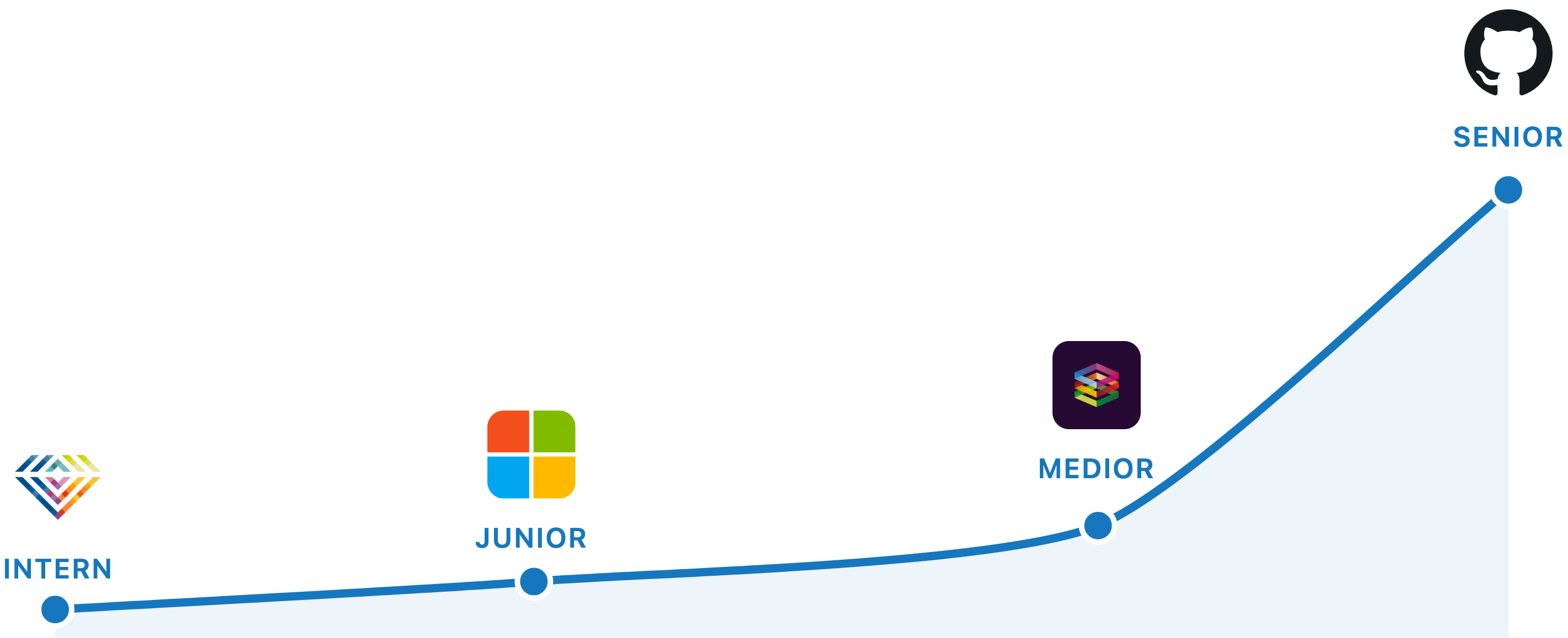
I started as a software tester on a $500/month internship in the Netherlands. Taught myself to code, learned to ship real systems, and worked my way to Senior Engineer at GitHub.
Then I left GitHub. I joined an AI research lab as Member of Technical Staff, where I currently build products for secure AI monitoring.
The cohort draws directly from my real experience so you can make progress fast.
I run this special cohort with only a few people because hands-on work with me is what it takes to bring you to become a world-class AI engineer.
Real Results

Vittor
AI Engineer
Built and deployed his portfolio piece, then landed the AI role
"The coaching played a huge part in my success. I focused on AI fundamentals, the certification path, and soft skills like professional writing. Having access to expert guidance gave me confidence during interviews and helped me feel I was on the right path.
I built my own platform (simple but functional) and deployed it on AWS. I used it in my portfolio and showcased it during interviews. The way complex topics were explained, especially the restaurant analogy for AI systems, really stuck with me. Focusing on doing the basics well was absolutely essential."
What You Will Get
8 Weekly Tuesday Sessions
3 hours each for 24 live hours total.
Project Scoping at Kickoff
We set the scope of what you'll ship and the milestones to get there before the live sessions start.
Code Reviews
Reviews of your code from Zen during the cohort.
Lifetime Demo Access
Every architecture demo is recorded and yours to keep.
Demo Day
You present what you built and get feedback from Zen, with a recording you can use in your portfolio.
12 Months Community Access
Included with the cohort.
Stop Learning Libraries, Start Landing Interviews
Frequently Asked Questions
Which Python skills do AI jobs actually require?
In 2026, AI engineering roles prioritize: 1) Async Python for handling concurrent API calls and streaming responses, 2) Data pipeline patterns using pandas, polars, or similar for preprocessing, 3) API design and FastAPI for serving models, 4) At least one LLM framework (LangChain, LlamaIndex, or custom), 5) Vector database integration patterns. Notice this isn't about memorizing library APIs—it's about understanding patterns that transfer across tools.
Do I need PyTorch or TensorFlow for AI jobs?
Depends on the role. Traditional ML engineering roles still use PyTorch/TensorFlow for model training. But most AI engineering roles in 2026 focus on LLM orchestration—you're calling models via APIs, not training them. For these roles, understanding prompt engineering, RAG patterns, and agent architectures matters more than deep framework knowledge. Know which type of role you're targeting.
How much time will this take?
You'll spend 3 hours every Tuesday in the live session and roughly 3 hours of async work in between, for 8 weeks. The Tuesday session time is fixed.
Is LangChain required for AI engineering jobs?
LangChain isn't required, but understanding the patterns it implements is valuable. Many teams use LangChain; others prefer LlamaIndex, custom code, or newer frameworks. The key is understanding why these tools exist: chaining LLM calls, managing context, integrating retrieval. Learn one framework deeply, and the concepts transfer. In coaching, we focus on patterns over specific tools.
I've signed up for cohorts before and dropped out. How is this different?
It probably isn't, and you should hold the money. Most cohort dropouts are people who couldn't articulate what they were shipping when they signed up. That's why the consult exists, and why I turn down most applications. If we get on the call and you can't tell me what you'll have shipped at the end of week 8, I'll point you to the AI Native Engineer community until you can.
I'm not pivoting careers. I want to build a product. Does this still work?
Yes, the cohort works for people shipping their first serious AI system whether the goal is to land a senior role or to launch a product. The shipped system serves both equally well.
Do I need prior AI experience?
You need to be able to code in Python or TypeScript. Complete beginners can follow the classroom they get access to before the cohort sessions to come in well-prepared.
What does it cost?
It's a four-figure investment that we discuss during the 30-minute consult, alongside whether the cohort is the right fit for your project.
Can I do this while working full-time?
Yes, most attendees do. The live session is one Tuesday a week and the async work fits around your existing schedule, as long as you can carve out roughly 6 hours a week.
I accept those who have the highest chance of success.
In the 30-minute call we discuss your goals and whether you are ready for the program.