RAG System Design Interview:
What You Need to Know
RAG is the most common AI system design question in 2026.
Master the architecture patterns that interviewers expect.
RAG Questions Keep
Coming Up in Interviews?
You understand RAG conceptually but struggle to discuss architecture trade-offs at depth.
You're not sure how to discuss chunking strategies, retrieval methods, and reranking.
Interviewers ask about scale and cost, but you've only built small prototypes.
Master RAG System Design
The World-Class AI Engineer Cohort
RAG interviews test your understanding of the full pipeline: ingestion, retrieval, generation, and production concerns. Learn each layer and the trade-offs at each step.
Document Ingestion
Parsing, chunking strategies, embedding models, and vector storage
Retrieval Layer
Vector search, hybrid search, metadata filtering, and top-k selection
Reranking & Context
Cross-encoders, context assembly, and prompt construction
Generation & Safety
Model selection, guardrails, citation handling, and error cases
Meet Your Mentor

My aim has been the same for years: become a world-class AI engineer. Every career move I've made has been measured against that.
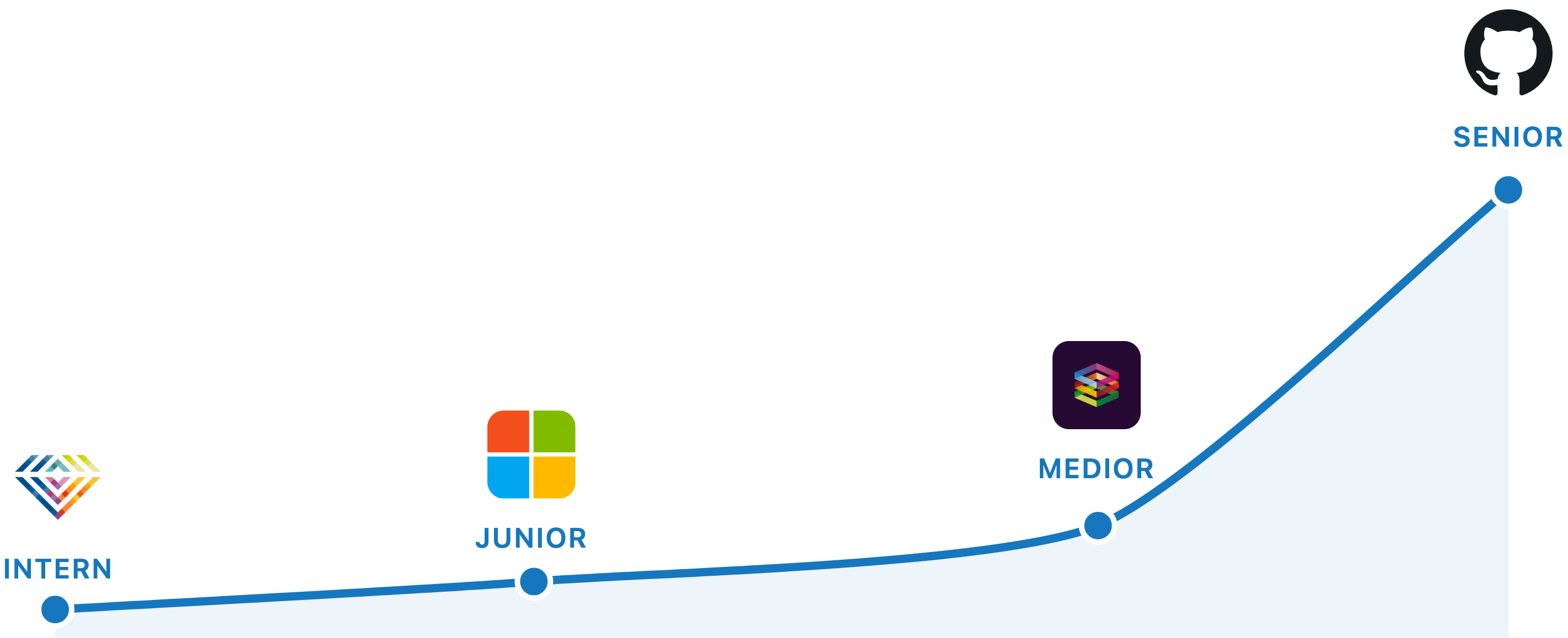
I started as a software tester on a $500/month internship in the Netherlands. Taught myself to code, learned to ship real systems, and worked my way to Senior Engineer at GitHub.
Then I left GitHub. I joined an AI research lab as Member of Technical Staff, where I currently build products for secure AI monitoring.
The cohort draws directly from my real experience so you can make progress fast.
I run this special cohort with only a few people because hands-on work with me is what it takes to bring you to become a world-class AI engineer.
Real Results

Vittor
AI Engineer
Built and deployed his portfolio piece, then landed the AI role
"The coaching played a huge part in my success. I focused on AI fundamentals, the certification path, and soft skills like professional writing. Having access to expert guidance gave me confidence during interviews and helped me feel I was on the right path.
I built my own platform (simple but functional) and deployed it on AWS. I used it in my portfolio and showcased it during interviews. The way complex topics were explained, especially the restaurant analogy for AI systems, really stuck with me. Focusing on doing the basics well was absolutely essential."
What You Will Get
8 Weekly Tuesday Sessions
3 hours each for 24 live hours total.
Project Scoping at Kickoff
We set the scope of what you'll ship and the milestones to get there before the live sessions start.
Code Reviews
Reviews of your code from Zen during the cohort.
Lifetime Demo Access
Every architecture demo is recorded and yours to keep.
Demo Day
You present what you built and get feedback from Zen, with a recording you can use in your portfolio.
12 Months Community Access
Included with the cohort.
RAG Is the #1 AI System Design Topic. Know It Cold.
Frequently Asked Questions
What RAG questions do interviewers commonly ask?
Common questions: Design a customer support RAG system, How would you handle multi-document queries, Design RAG for a legal document search, How do you evaluate RAG quality, Design RAG with access control, How would you reduce hallucinations in RAG. Interviewers test your ability to make trade-offs, not memorize one architecture.
How should I discuss chunking strategies in interviews?
Cover multiple approaches: fixed-size chunks (simple but breaks context), semantic chunking (better coherence but slower), recursive chunking (hierarchical but complex). Discuss trade-offs: smaller chunks = more precise retrieval but less context, larger chunks = more context but noisier results. Mention overlap strategies to maintain continuity. Show you understand there's no universal best approach.
When should I recommend hybrid search in a RAG interview?
Recommend hybrid search when: documents contain technical terms or proper nouns (keyword search helps), users ask questions with exact phrases, you need to handle both semantic and keyword queries. Explain the architecture: combine BM25/keyword scores with vector similarity scores. Mention that hybrid often outperforms pure vector search in production.
How do I explain when to use reranking in RAG?
Use reranking when: initial retrieval returns many borderline-relevant results, you need high precision over recall, latency budget allows for extra processing step. Explain the two-stage approach: fast bi-encoder retrieval gets top 50-100 candidates, slower cross-encoder reranking selects final top-k. Trade-off: better relevance vs. added latency (100-300ms typically).
How do I discuss RAG scale without production experience?
Discuss: (1) Caching—cache embeddings, cache frequent queries, cache LLM responses, (2) Async processing—queue ingestion, batch embeddings, (3) Vector DB scaling—sharding strategies, approximate nearest neighbor trade-offs, (4) LLM costs—when to use smaller models, prompt caching. Show you've thought about these even if you haven't implemented at scale.
How long should I prepare specifically for RAG interviews?
With general AI knowledge: 1-2 weeks focused on RAG. Spend time: (1) Building a simple RAG system end-to-end, (2) Reading engineering blogs about production RAG, (3) Understanding each component's trade-offs, (4) Practicing explaining architecture decisions out loud. Hands-on experience, even small-scale, dramatically improves interview performance.
I've signed up for cohorts before and dropped out. How is this different?
It probably isn't, and you should hold the money. Most cohort dropouts are people who couldn't articulate what they were shipping when they signed up. That's why the consult exists, and why I turn down most applications. If we get on the call and you can't tell me what you'll have shipped at the end of week 8, I'll point you to the AI Native Engineer community until you can.
I'm not pivoting careers. I want to build a product. Does this still work?
Yes, the cohort works for people shipping their first serious AI system whether the goal is to land a senior role or to launch a product. The shipped system serves both equally well.
Do I need prior AI experience?
You need to be able to code in Python or TypeScript. Complete beginners can follow the classroom they get access to before the cohort sessions to come in well-prepared.
What does it cost?
It's a four-figure investment that we discuss during the 30-minute consult, alongside whether the cohort is the right fit for your project.
Can I do this while working full-time?
Yes, most attendees do. The live session is one Tuesday a week and the async work fits around your existing schedule, as long as you can carve out roughly 6 hours a week.
I accept those who have the highest chance of success.
In the 30-minute call we discuss your goals and whether you are ready for the program.