Staff AI Engineer vs Senior:
The Jump to Staff Level
Senior to staff is the hardest promotion in engineering.
Understanding the difference helps you prepare for this career-defining transition.
Stuck at Senior Level
Despite Years of Strong Performance?
You've been senior for years, delivering consistently, but staff promotion feels impossible.
You're not sure what 'staff-level impact' actually looks like in AI engineering.
You see people promoted to staff and can't identify what they did differently.
Cross-Team Impact: The Staff Threshold
The World-Class AI Engineer Cohort
Seniors own systems. Staff engineers shape how multiple teams build systems. The jump requires impact beyond your immediate team—influencing technical direction at a broader scope.
Senior Scope
Own complex systems, lead technical decisions within your team, mentor engineers
Staff Scope
Influence technical direction across teams, define standards, drive org-wide initiatives
Key Difference
Seniors excel within team boundaries. Staff engineers transcend those boundaries.
Meet Your Mentor

My aim has been the same for years: become a world-class AI engineer. Every career move I've made has been measured against that.
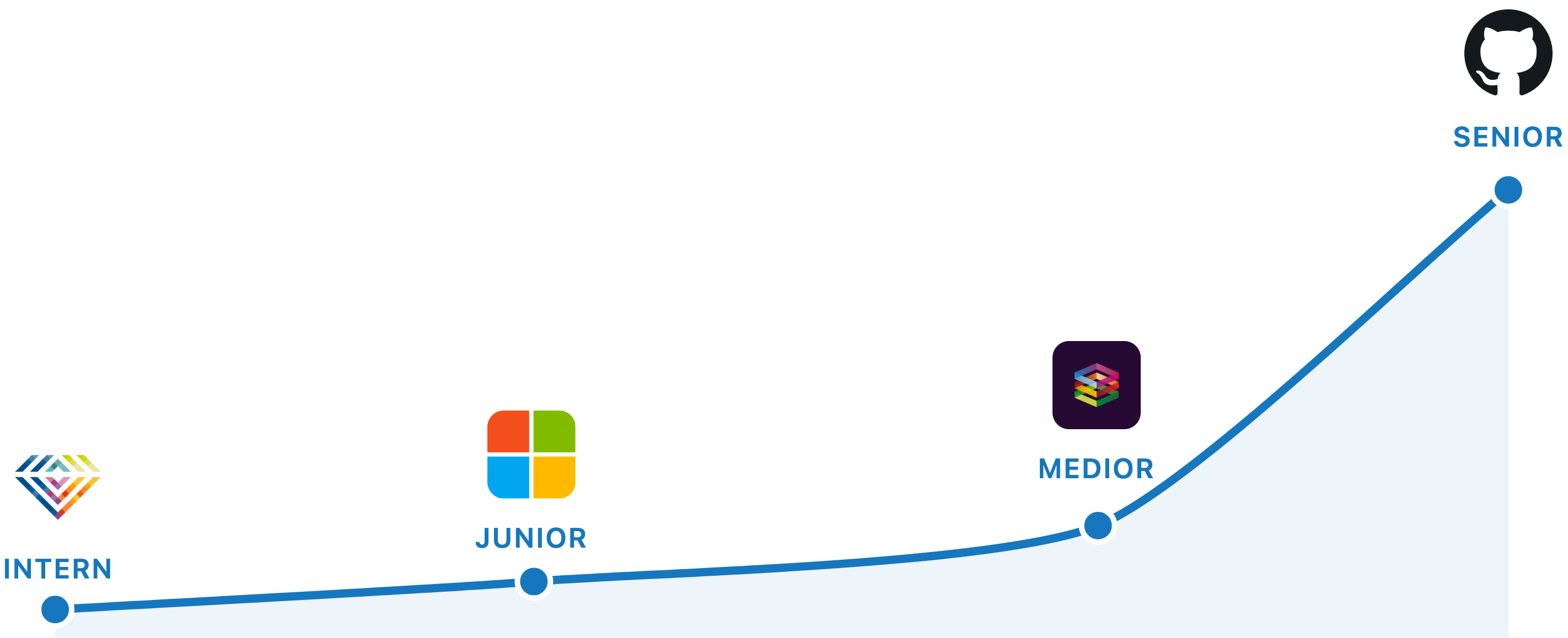
I started as a software tester on a $500/month internship in the Netherlands. Taught myself to code, learned to ship real systems, and worked my way to Senior Engineer at GitHub.
Then I left GitHub. I joined an AI research lab as Member of Technical Staff, where I currently build products for secure AI monitoring.
The cohort draws directly from my real experience so you can make progress fast.
I run this special cohort with only a few people because hands-on work with me is what it takes to bring you to become a world-class AI engineer.
Real Results

Vittor
AI Engineer
Built and deployed his portfolio piece, then landed the AI role
"The coaching played a huge part in my success. I focused on AI fundamentals, the certification path, and soft skills like professional writing. Having access to expert guidance gave me confidence during interviews and helped me feel I was on the right path.
I built my own platform (simple but functional) and deployed it on AWS. I used it in my portfolio and showcased it during interviews. The way complex topics were explained, especially the restaurant analogy for AI systems, really stuck with me. Focusing on doing the basics well was absolutely essential."
What You Will Get
8 Weekly Tuesday Sessions
3 hours each for 24 live hours total.
Project Scoping at Kickoff
We set the scope of what you'll ship and the milestones to get there before the live sessions start.
Code Reviews
Reviews of your code from Zen during the cohort.
Lifetime Demo Access
Every architecture demo is recorded and yours to keep.
Demo Day
You present what you built and get feedback from Zen, with a recording you can use in your portfolio.
12 Months Community Access
Included with the cohort.
Staff Roles Are Competitive. Preparation Separates Candidates.
Frequently Asked Questions
What is the main difference between staff and senior AI engineers?
Impact scope. Seniors deliver excellence within their team—owning systems, making technical decisions, mentoring teammates. Staff engineers impact multiple teams—setting technical direction, creating platforms others use, driving initiatives that change how the organization works. A senior builds a great RAG system for their team. A staff engineer creates the RAG architecture that 5 teams adopt.
How much more do staff AI engineers earn than seniors?
Substantial increase. Senior AI engineers earn $150K-$250K. Staff engineers earn $200K-$350K+, with total compensation at top companies reaching $400K-$500K+ including equity. That's roughly 30-50% more than senior level. The premium reflects broader impact: staff engineers multiply output across the organization, not just their team.
How do I get promoted from senior to staff?
You need demonstrable cross-team impact. This means: leading initiatives that span multiple teams, creating tools or platforms others adopt, driving technical decisions at the org level, mentoring engineers outside your team, writing influential design docs. You can't just be excellent at senior work—you need to show staff-level scope. This usually requires seeking out opportunities that cross team boundaries.
What skills do staff AI engineers need beyond senior?
Technical depth stays important, but staff adds: organizational influence (driving decisions without authority), technical strategy (seeing 1-2 years ahead), communication at scale (writing that influences dozens of engineers), stakeholder management (aligning engineering direction with business goals), and political savvy (navigating org dynamics). You're not just a better coder—you're a technical leader.
How long does it take to go from senior to staff?
Typically 3-5 years at senior level, but this varies widely. Some engineers stay senior their entire career (by choice or circumstance). Fast progressions happen when you land high-visibility cross-team projects and deliver exceptional results. Slow progressions happen at companies without staff-level work, or when engineers don't actively seek broader impact. The opportunity matters as much as the skill.
Is the staff engineer promotion worth pursuing?
It depends on what you want. Staff brings higher compensation, broader influence, and more interesting problems. But it also brings more ambiguity, more politics, and less time writing code. If you love deep individual contribution, senior might be your happy place—and that's fine. Staff is worth it if you genuinely want to shape how organizations build AI systems, not just build systems yourself.
I've signed up for cohorts before and dropped out. How is this different?
It probably isn't, and you should hold the money. Most cohort dropouts are people who couldn't articulate what they were shipping when they signed up. That's why the consult exists, and why I turn down most applications. If we get on the call and you can't tell me what you'll have shipped at the end of week 8, I'll point you to the AI Native Engineer community until you can.
I'm not pivoting careers. I want to build a product. Does this still work?
Yes, the cohort works for people shipping their first serious AI system whether the goal is to land a senior role or to launch a product. The shipped system serves both equally well.
Do I need prior AI experience?
You need to be able to code in Python or TypeScript. Complete beginners can follow the classroom they get access to before the cohort sessions to come in well-prepared.
What's the typical progression timeline to staff engineer?
Junior (0-2 years) → Mid (2-4 years) → Senior (4-7 years) → Staff (7-12+ years). That's 7-12 years total, though some reach staff faster in high-growth environments. The senior-to-staff jump is usually the longest wait because it requires opportunity, not just skill. Many excellent senior engineers never get the chance to demonstrate staff-level impact at their companies.
What does it cost?
It's a four-figure investment that we discuss during the 30-minute consult, alongside whether the cohort is the right fit for your project.
Can I do this while working full-time?
Yes, most attendees do. The live session is one Tuesday a week and the async work fits around your existing schedule, as long as you can carve out roughly 6 hours a week.
I accept those who have the highest chance of success.
In the 30-minute call we discuss your goals and whether you are ready for the program.