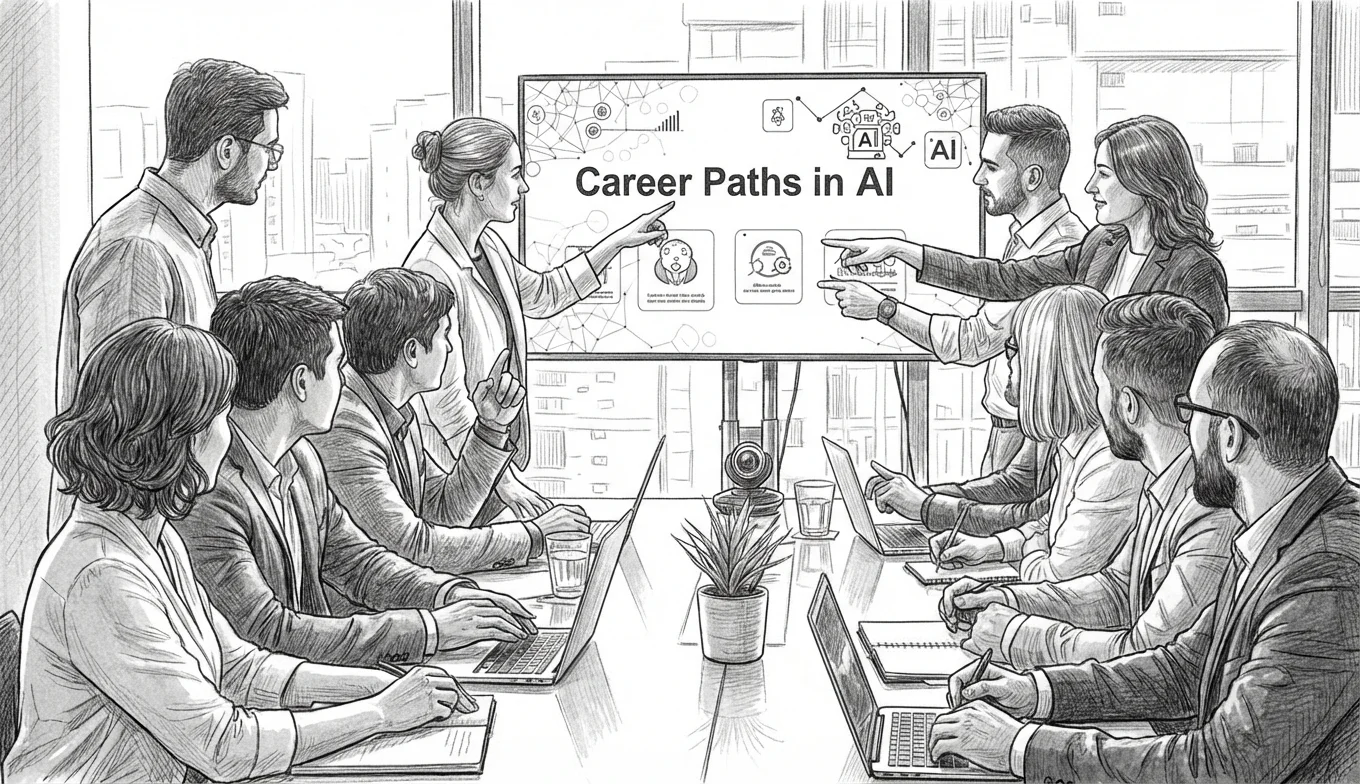
IBM Tripling Junior Hiring While Tech Cuts: Lessons for AI Engineers
The conventional wisdom says AI will eliminate junior developer roles. Industry data seems to support this: entry-level tech hiring dropped 60% between 2022 and 2024, and Harvard research shows junior employment at AI-adopting companies declined 9-10% within six quarters of implementation. Yet IBM just announced they’re tripling entry-level hiring in 2026. Understanding why reveals what actually matters for career success in the AI era.
IBM’s Chief Human Resources Officer Nickle LaMoreaux made the announcement explicit: “And yes, it’s for all these jobs that we’re being told AI can do.” This isn’t denial about AI capabilities. It’s recognition that the junior developer role is transforming, not disappearing.
| The Junior Developer Reality | Industry Trend | IBM’s Approach |
|---|---|---|
| Routine coding tasks | Automated by AI | Still automated |
| Customer interaction | Often neglected | Primary focus |
| AI output validation | Rarely trained | Core skill |
| Strategic thinking | Assumed to come later | Expected from day one |
| Long-term leadership pipeline | Being hollowed out | Actively cultivated |
Why the Industry Is Getting This Wrong
The standard playbook is straightforward: AI handles routine tasks, so hire fewer juniors. Companies implementing this strategy are seeing immediate cost savings. But they’re making a critical mistake that IBM spotted.
Research from Harvard tracking 62 million workers across 285,000 firms found something counterintuitive. The junior employment decline wasn’t driven by layoffs or promotions. It was driven by frozen hiring. Companies stopped bringing in new talent because they assumed AI would handle those roles. According to the study, the decline in junior hiring was concentrated in occupations most exposed to generative AI capabilities.
The problem is that AI can handle the mechanics of junior work but cannot develop the judgment that makes future senior engineers valuable. Someone has to learn how to manage AI-assisted workflows, validate outputs, and identify when AI is confidently wrong. That skill doesn’t develop in a vacuum. It develops through years of hands-on experience with increasing responsibility.
LaMoreaux put it directly: “The companies three to five years from now that are going to be the most successful are those companies that doubled down on entry level hiring in this environment.”
How IBM Redesigned Junior Roles
The key insight is that IBM didn’t preserve junior roles by ignoring AI. They preserved them by embracing AI and redesigning what juniors actually do.
In the past, an entry-level developer at IBM would spend approximately 34 hours per week coding. Now they spend significantly less time on routine coding because AI tools handle that work. The freed time goes to activities that require human judgment: working directly with customers, translating requirements, explaining AI outputs, and handling conversations that language models can approximate but not actually have.
This shift represents a fundamental redefinition. Junior developers are becoming the human interface between AI systems and the people those systems are supposed to serve. The role didn’t get smaller. The scope expanded while the mechanical tasks contracted.
For those entering the field, this means building a strong technical foundation matters even more than before. You’re not competing with AI on coding speed. You’re learning to leverage AI while providing what it cannot: judgment, context, and genuine human connection.
Skills That Actually Matter Now
IBM’s hiring expansion isn’t charity. It reflects a calculated assessment of what creates business value. The skills they’re looking for in entry-level candidates have shifted dramatically.
AI Tool Proficiency: Knowing how to use AI coding assistants effectively is now table stakes. But more importantly, knowing when not to trust their output separates effective practitioners from those who create technical debt. The ability to work strategically with AI tools has become non-negotiable.
Customer Communication: When routine coding gets automated, what remains is understanding what customers actually need and translating that into technical requirements. This skill was once developed over years. Now it’s expected from day one.
Output Validation: AI systems produce confident-sounding results even when wrong. Developing intuition for when to verify, how to test, and where models fail requires systematic exposure to real-world failures. IBM recognizes that entry-level hires who grow up with these tools will develop this intuition organically.
Systems Thinking: Understanding how different technologies interact in the real world matters more than memorizing syntax. A solid understanding of algorithms, data structures, debugging, and design principles makes you stand out from those who only know how to prompt.
The Pipeline Problem Coming for Everyone
IBM’s strategy addresses a problem that will hit the entire industry in 3-5 years. A 67% reduction in junior hiring from 2024-2026 means 67% fewer potential leaders in 2031-2036. The industry is trading short-term savings for long-term structural problems.
Matt Garman, CEO of Amazon Web Services, publicly called replacing juniors with AI “one of the dumbest ideas” a company can have. According to Forrester, 55% of employers report regretting laying off workers for AI. The pattern is already emerging: companies cut junior roles, face capability gaps, and scramble to catch up.
This creates significant opportunity for those entering the field now. Competition for entry-level positions is intense, but companies that understand the pipeline problem are actively seeking candidates who can demonstrate readiness for AI-augmented work. The junior developer who understands how to validate AI output and communicate with stakeholders has become genuinely valuable.
Warning: Simply knowing how to prompt AI tools is not a differentiator. Everyone can prompt. The differentiator is knowing when AI is wrong, understanding why it failed, and communicating that effectively to non-technical stakeholders.
What This Means for Your Career Strategy
If you’re early in your career or considering a transition into AI engineering, IBM’s approach offers a practical roadmap.
Build judgment, not just technical skills. AI will keep getting better at generating code. Your competitive advantage lies in knowing what code should be generated, validating that it works correctly, and understanding when human judgment must override AI suggestions. This requires hands-on experience with real systems, not just tutorials.
Develop customer-facing capabilities early. The traditional career ladder assumed juniors would code for years before engaging with customers. That timeline has collapsed. Start practicing how to explain technical concepts to non-technical audiences now.
Treat AI tools as force multipliers, not replacements for understanding. Junior developers who blindly accept AI output create technical debt. Those who understand what the AI generated, why it works, and where it might fail become invaluable quickly. This requires building genuine technical depth alongside AI proficiency.
Position yourself for the leadership gap. Companies cutting junior hiring today will face severe mid-level talent shortages within five years. Those who enter now and develop systematically will have unusual advancement opportunities as the pipeline problem becomes undeniable.
The Contrarian Position Vindicated
IBM isn’t sentimental about junior developers. They’re one of the most pragmatic employers in tech. Their tripling of entry-level hiring reflects hard-nosed analysis about what creates long-term competitive advantage.
The companies following the conventional playbook of slashing junior roles will face a choice in a few years: pay premium rates to poach mid-level talent from competitors, or attempt to retrofit senior engineers with skills that develop naturally through years of junior experience. Neither option is attractive.
For AI engineers at any career stage, the lesson is clear. The roles that survive and thrive in the AI era are those that combine technical capability with judgment, communication, and strategic thinking. These skills don’t emerge automatically. They require intentional development and exposure to real business problems.
The junior developer isn’t disappearing. The junior developer is evolving into something more valuable: the human interface between increasingly capable AI systems and the humans they serve.
Frequently Asked Questions
Should junior developers worry about AI replacing their jobs?
The concern is legitimate but often misdirected. AI is replacing specific tasks, not roles. Junior developers who define themselves by routine coding are vulnerable. Those who develop judgment, validation skills, and customer communication abilities are becoming more valuable, not less. IBM’s hiring expansion demonstrates that companies who understand this dynamic are actively seeking such candidates.
What skills should new graduates focus on for AI-era success?
Technical fundamentals still matter, but the emphasis has shifted. Focus on understanding systems holistically, developing AI tool proficiency alongside skepticism about AI output, and building customer communication skills early. The ability to explain technical concepts clearly and identify when AI suggestions are problematic differentiates successful candidates.
How do I compete for junior roles when companies are hiring fewer?
Target companies that understand the pipeline problem like IBM rather than those following short-term cost-cutting strategies. Demonstrate in interviews that you can work effectively with AI tools while maintaining the judgment to validate and improve their output. Build a portfolio showing real problem-solving, not just AI-generated code.
Recommended Reading
- AI Career Path Guide
- Building a Six-Figure AI Engineering Portfolio
- AI Anxiety Career Survival
- AI Engineer vs Machine Learning Engineer
Sources
To see exactly how to build the AI fundamentals that employers value, Watch the builds on YouTube tutorial on YouTube.
If you’re navigating the shifting landscape of AI careers, join the AI Engineering community where engineers share real-world experience about what’s actually working in the job market.
Inside the community, you’ll find discussions about interview preparation, portfolio development, and the specific skills that are driving hiring decisions right now.
