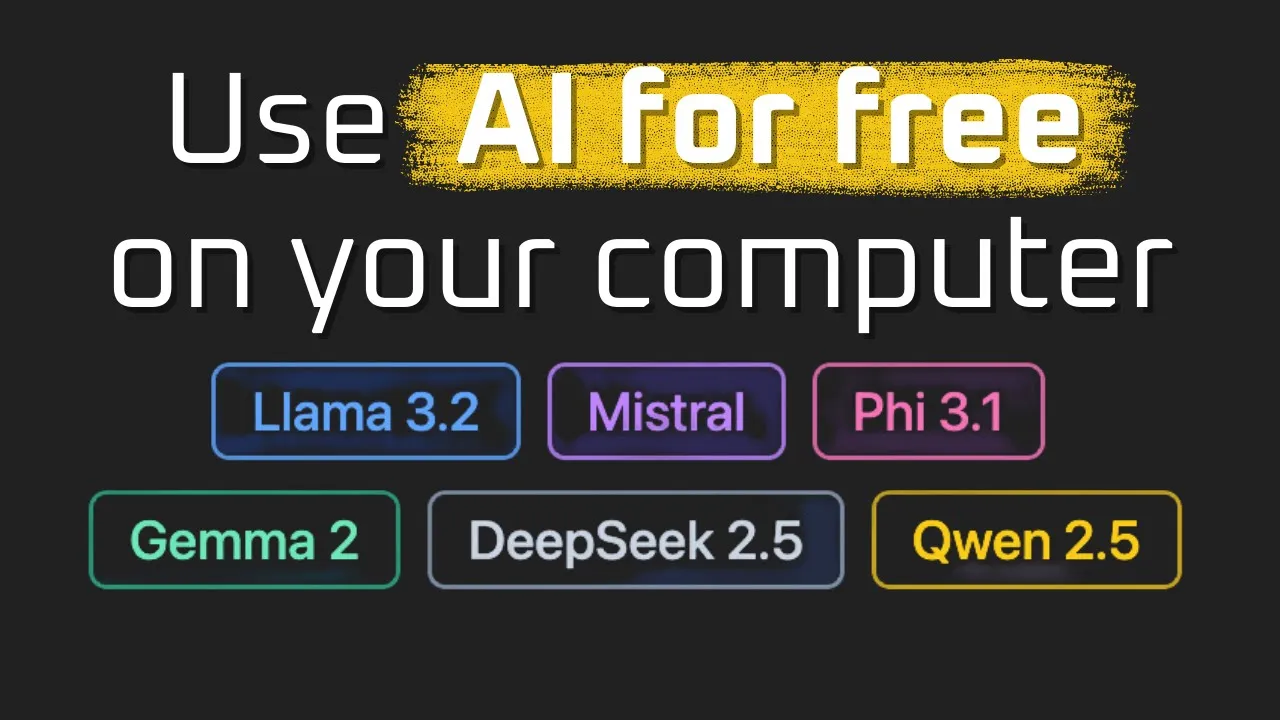
Local AI for Startup Founders Without Venture Funding
I have watched too many bootstrapped founders die a quiet death by API invoice. They build something clever, demo it on Product Hunt, get a few hundred users, and then open their billing dashboard at the end of the month and feel their stomach drop. The product works. The customers love it. The unit economics are upside down. That, more than any competitor or any market timing problem, is what kills seed stage AI startups in 2026. So when people ask me about local AI for startup founders without venture funding, I am not having an academic conversation. I am talking about whether your company exists in twelve months.
I want to walk you through how I think about this. Not as a hobbyist who likes tinkering, although I do, but as someone who has built shipping products and watched the cost column ruin otherwise great businesses. The video I made on getting a local model running in ten minutes is the practical floor of this conversation. The strategy on top of it is what this post is about.
Why are API bills the silent killer of seed stage runway?
Here is the pattern I see constantly. A founder builds an MVP on a frontier model API. The first month costs forty dollars. They feel like geniuses. The second month it is three hundred. The third month it is two thousand. By the time they have any meaningful usage, the model provider is a larger line item than their AWS bill, their salary draw, and their cofounder’s salary draw combined.
The reason this happens is that API costs scale with success. Every new user, every retained user, every power user makes the bill go up. There is no version of this where you grow and the cost goes down. You are renting intelligence by the token, and the meter only runs in one direction.
For a venture backed startup, this is annoying but survivable. They have eighteen months of runway and a Series A coming. For a bootstrapped founder paying out of a Stripe account that also pays their rent, this is existential. Every paying customer above your inference cost is a customer that funds your company. Every paying customer below it is actively making you poorer.
This is why local AI is not a nerdy preference for founders without funding. It is a survival mechanism.
What does running a model locally actually change about your business?
When I ran through LM Studio in the demo, I downloaded a three billion parameter open source model, loaded it with a five thousand token context window, and started chatting in under ten minutes. Then I flipped on the local server, hit the OpenAI compatible chat completions endpoint, and called it from a Python script. The whole flow looked identical to calling a hosted provider, except the meter was off.
That last part is the one founders miss. The interface is the same. The integration code is the same. Your product does not need to know whether the inference is happening on a hosted API or on a Mac sitting in your living room. From the customer’s perspective, the experience is indistinguishable. From your perspective, the cost structure is fundamentally different.
You have just turned a variable cost into a fixed cost. Your hardware is bought. Your electricity bill is roughly constant. Whether you serve one query a day or one million, the marginal cost approaches zero. That is the most important sentence in this entire post. Read it again. Marginal cost approaches zero.
For a deeper walkthrough of the setup itself, I keep my local LLM setup cost effective guide updated with the current model recommendations.
When does local AI let you charge less than competitors?
This is where it gets fun. If your competitor is paying a hosted provider per token and you are not, you have pricing power they cannot match without burning their own margins. You can undercut them by thirty percent and still keep more gross profit per customer than they do.
I have seen this play out in three categories where local AI gives bootstrapped founders an unfair advantage.
The first is high volume, low complexity work. Summarization, classification, tagging, light rewriting, structured extraction. A small open source model handles these tasks at quality that most users cannot distinguish from a frontier model. If your product is built around any of these, you should be running locally and pricing aggressively.
The second is privacy sensitive verticals. Legal, healthcare, finance, internal enterprise tools. Customers in these categories actively prefer that their data never leaves a controlled environment. You can market local inference as a feature, not just a cost choice. Suddenly you are not the cheap option, you are the secure option, and you happen to also have better margins.
The third is anything with predictable, repetitive query patterns. Customer support routing, internal knowledge search, document processing pipelines. The query distribution is narrow enough that a smaller model can be tuned and prompted to handle ninety percent of cases without ever touching a frontier API.
When does it not work, and why be honest about that?
I am not going to sell you on local AI as a universal answer, because it is not. There are real cases where calling a hosted frontier model is the right call, and pretending otherwise will get founders into trouble.
If your product depends on the absolute best reasoning available, you are going to lose against frontier models. Complex multi step reasoning, code generation across large codebases, long context analysis above one hundred thousand tokens, agentic workflows that branch unpredictably. A three billion parameter model is not going to fight a frontier model on those tasks and win.
If you have spiky, unpredictable load, hosted APIs handle scaling for you. A local server on your machine cannot serve ten thousand concurrent users. You will need to think about hosted local inference on rented GPUs, which changes the cost story.
If your team genuinely cannot manage infrastructure, the operational burden of running models is a real cost. I have seen founders save five hundred dollars a month on inference and lose forty hours a month on uptime, debugging, and model updates. Do that math honestly before you commit.
The honest answer is hybrid. Use the right tool for the right query. Route easy work to your local model and hard work to a hosted API. Most founders who go all in on one extreme regret it within six months.
Should you treat hardware as capex or just keep paying API as opex?
This is the question that founders without funding actually struggle with, because it is fundamentally a cash flow question, not a technology question.
Buying a Mac with a strong M chip, or a workstation with a decent Nvidia GPU, is a capital expense. You drop two to four thousand dollars up front. That is real money for a bootstrapped founder, and it is sitting on your books as a depreciating asset.
Calling a hosted API is an operating expense. You pay nothing today, you pay as you grow, and your books look cleaner short term.
The trap is that opex feels safer because it postpones the decision. But it is the same trap as renting versus owning your home for thirty years. The total cost over the lifetime of your product is not even close. If your product has any real usage, the hardware pays itself back in three to six months and then continues paying dividends for the next three to five years.
For a bootstrapped founder, I argue the capex approach is almost always correct, because it converts a runway destroying variable cost into a known, finite, one time hit. You can plan around two thousand dollars. You cannot plan around an exponentially growing API bill that scales with your own success.
If you want to see what hardware is genuinely required, my piece on how to learn AI without expensive hardware breaks down the minimum viable setup. You do not need a five thousand dollar workstation to start.
I have also published a set of open source local AI projects that you can fork and run on hardware you already own. Use them as a starting point so you are not building the cost saving infrastructure from zero.
How do you actually evaluate a model for production use?
The thing the demo does not show, because it is a ten minute setup video, is the evaluation work that has to happen before you put a local model in front of paying customers. This is where most founders cut corners and pay for it later.
You need a real evaluation set. Take a hundred actual queries from your product, write down the ideal output for each, and run both your local model and your current hosted model against them. Score the outputs. If the local model is within ten to fifteen percent of the hosted model on quality and the cost difference is meaningful, ship it. If the gap is larger, keep tuning your prompts, try a larger local model, or accept that this particular task should stay on a hosted API for now.
The token per second number you see in LM Studio matters too. If your local model produces output at fifty tokens per second and your users expect chat speed, you are fine. If you are at five tokens per second on a long context query, your customers will notice and churn.
The good news is that the open source model ecosystem is improving faster than the closed one in many practical respects. The model you ruled out as too weak six months ago is probably good enough today. Re evaluate quarterly.
What does this mean for AI engineers working at startups?
If you are an engineer rather than a founder, all of this still matters to you, because the founders making these calls are the ones writing your paycheck. Engineers who can credibly own the local AI strategy at a bootstrapped startup are extremely valuable, because they directly protect runway. I write more about this dynamic in how local AI is shaping software engineering careers, and the compensation picture is in my AI engineer salary complete guide.
If you want the developer focused walkthrough of the toolchain, including model serving and the OpenAI compatible API surface, my Ollama local development guide covers the practical workflow end to end.
Where should a founder without funding start this week?
Concretely, here is the path I would walk if I were you.
Download LM Studio or Ollama tonight. Pull a small model that fits your hardware. Run it for an hour against the actual queries your product handles. Write down where it is great, where it is mediocre, and where it falls apart. Then route just the great category to local inference inside your product. Keep the rest on a hosted API for now. Watch your bill drop next month. Reinvest the savings in better hardware or more model evaluation. Repeat.
The founders I see win in this environment are not the ones with the most capital. They are the ones with the lowest cost per served customer. Local AI, used pragmatically, is the single biggest lever you have for getting that number down.
If you want to see the original ten minute setup walkthrough on video, it is on my YouTube channel. And if you want to talk to other founders and engineers running local AI in production, come join us at aiengineer.community. That is where the real cost saving conversations happen.
